Cart
0
Bedworld's Verdict
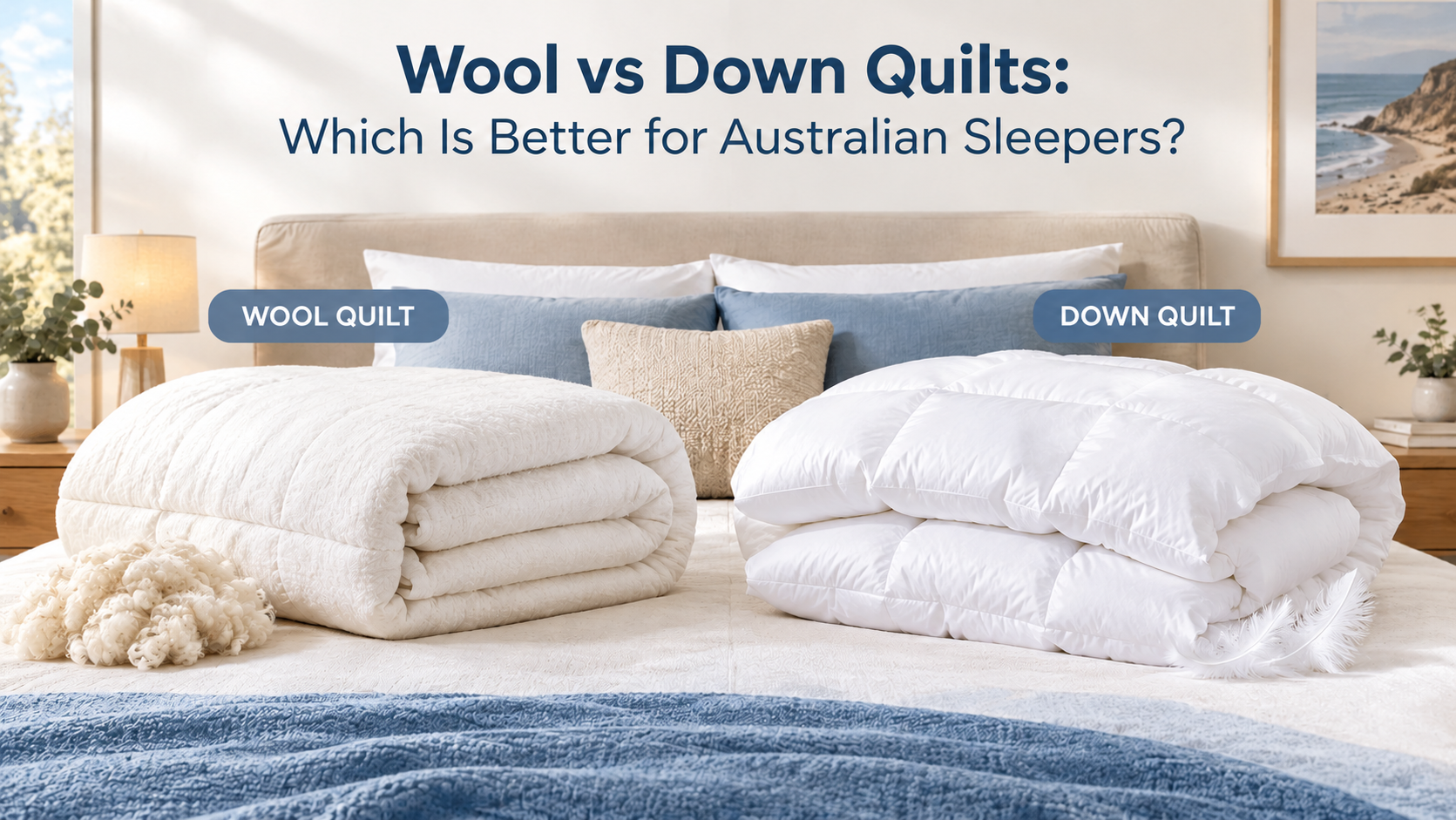
Wool quilts suit people who sleep hot, sweat at night, or want one quilt that stays comfortable across a wide range of temperatures. Down quilts suit people who feel the cold, want the most warmth for the least weight, and prefer a lofty, cocooning feel. If you share a bed and one of you runs hot while the other runs cold, wool is usually the easier compromise.
Why you can trust this guide
This guide was written by the Bedworld Sleep & Bedding Team, drawing on more than 20 years of helping Perth customers in our Osborne Park showroom, and reviewed by Anand, Sleep Expert with 25+ years of experience. Product details come from Bedworld's own product pages, and care advice follows manufacturer guidance.
Choosing the Right Quilt for Australian Conditions
Choosing A Quilt sounds simple until you start comparing. Wool and down are the two natural fills most Australians consider, and both have loyal fans. Some people swear their wool quilt is the only thing that stops them overheating. Others will not give up the light, cloud-like feel of down.
The right choice depends less on which fill is "best" and more on how you sleep, How Warm your Bedroom Gets, and how much care you are prepared to give your bedding. This guide compares wool and down on warmth, breathability, weight, allergies, care, ethics, lifespan and cost, with a focus on what works in Perth's hot summers and cool, damp winters.
In this guide: how each fill works; a side-by-side comparison; hot sleepers; cold sleepers; what works in Perth; quilt weight (GSM); feel; allergies; care; ethics; lifespan and cost; two real examples; which to choose; FAQs.
How Each Fill Keeps You Warm
Both fills work by trapping still air, which is a poor conductor of heat. The way they do it is different, and that difference explains most of how they feel.
How wool works
Wool fibres are naturally crimped, like tiny springs. When thousands of them are layered together, the crimp creates countless small air pockets that hold warmth close to the body. Wool is also known for managing moisture well. It can absorb moisture vapour from the air around your body and release it again, which helps keep the space under the quilt drier. A drier bed feels cooler in summer and less clammy in winter.
How down works
Down is the soft, fluffy undercoating beneath the outer feathers of ducks and geese. Each down cluster has fine filaments radiating from a central point, and these clusters spring apart to create loft, which is the thickness and fluffiness of the quilt. More loft means more trapped air and more warmth. Down gives a very high level of warmth for its weight, which is why down quilts feel light even when they are very warm.
Many quilts sold as "down" are a mix of down and feather. Feathers are flatter and heavier, add some structure, and lower the price. The down-to-feather ratio on the label tells you how much of the fill is down.

Wool vs Down at a Glance
|
Factor |
Wool quilt |
Down or down and feather quilt |
|
Warmth for weight |
Moderate; heavier for the same warmth |
High; light for the warmth it gives |
|
Breathability and moisture |
Excellent at handling sweat and humidity |
Good, but can feel warm if the quilt is too heavy |
|
Feel |
Flatter, drapes close to the body |
Lofty, fluffy, cocooning |
|
Best for |
Hot sleepers, night sweats, couples with different needs |
Cold sleepers, cold rooms, people who like a light quilt |
|
Care |
Air regularly; washing depends on the label |
Washable on many models; must be dried thoroughly |
|
Typical lifespan |
Many years with good care |
Many years with good care; quality down lasts longest |
Which Is Better for Hot Sleepers?
For most hot sleepers, wool is the better choice. The issue at night is rarely the temperature alone. It is the build-up of heat and moisture under the covers. When you start to sweat and the moisture has nowhere to go, the bed feels sticky and you wake up. Wool's ability to absorb and release moisture vapour helps prevent that.
Down can still work for warm sleepers, but the weight of the quilt matters a great deal. A heavy winter-weight down quilt in a warm Perth bedroom will trap more heat than most people want. A lightweight down quilt, or one used only in the coldest months, is a better fit.
The quilt is only one part of the picture. A Mattress that Holds Heat or A Non-Breathable protector can make any quilt feel warmer. Our guide to Choosing Bedding for Hot and Cold Sleepers looks at the whole bed.
|
Bedworld tip: Couples are where wool often wins. When one partner runs hot and the other runs cold, a mid-weight wool quilt tends to keep both comfortable because it moves moisture away rather than simply adding heat. The colder partner can add a light blanket on their side. |
Which Is Better for Cold Sleepers?
If you feel the cold, live in an older home that loses heat, or keep the heater off at night, down has the advantage. Its warmth-to-weight ratio means you can sleep under a lot of insulation without feeling pinned down. Many cold sleepers also like the way a lofty down quilt settles around the shoulders and blocks draughts.
A winter-weight wool quilt is also warm, and some cold sleepers prefer its closer, heavier drape. The difference is that wool reaches its warmth with more weight. If you like the feeling of a heavier blanket, that is a plus. If you want to feel light under the covers, down usually wins.
What Works Best in Perth?
Perth has long, hot summers and relatively mild winters, with most of its rain in the cooler months. That climate leads to a few practical patterns:
-
A mid-weight wool quilt suits many Perth households for most of the year, because it stays comfortable as temperatures change.
-
In the hottest weeks of summer, many people swap to a light quilt, a coverlet or just a Sheet.
-
A warmer down quilt is often only needed for a few months in winter, particularly in bedrooms that face south or sit on cold external walls.
-
Damp winter air makes moisture management more important, which favours wool or a well-aired down quilt.
Some households keep two quilts: a light one for summer and a warmer one for winter. Others buy one all-season quilt and add a blanket on the coldest nights. If you switch bedding with the seasons, our article on Adjusting your Sleep Setup Between Summer and Autumn has more ideas.
Understanding Quilt Weight (GSM)
Quilt warmth is usually described by GSM, which stands for grams per square metre of fill. A higher number means more fill and generally more warmth.
The important point is that GSM only compares quilts with the same fill. Wool, down, feather and synthetic fibres insulate differently, so a 350GSM wool quilt and an 800GSM down and feather quilt cannot be compared directly by their numbers. Down's loft means it often feels warmer at a given weight, while feathers add weight without adding as much warmth.
As a rough guide within each fill type, lower GSM quilts suit summer or warm sleepers, mid-range quilts suit most of the year, and the highest GSM quilts are for winter or people who feel the cold.
Weight and Feel in Bed
Wool quilts are flatter and heavier than down quilts of similar warmth. They drape closely over the body, which some people find comforting and settling. Wool also tends to stay where you put it rather than sliding off the side of the bed.
Down quilts are lighter and puffier. They create a fluffy look on the bed and trap air around you rather than lying flat against you. People who dislike feeling weighed down usually prefer down. Neither feel is better; it is a personal preference, and it is worth feeling both in person if you can.
Allergies and Sensitivities
Allergies are a common reason people hesitate over natural fills, but the picture is more nuanced than "natural fills cause allergies".
-
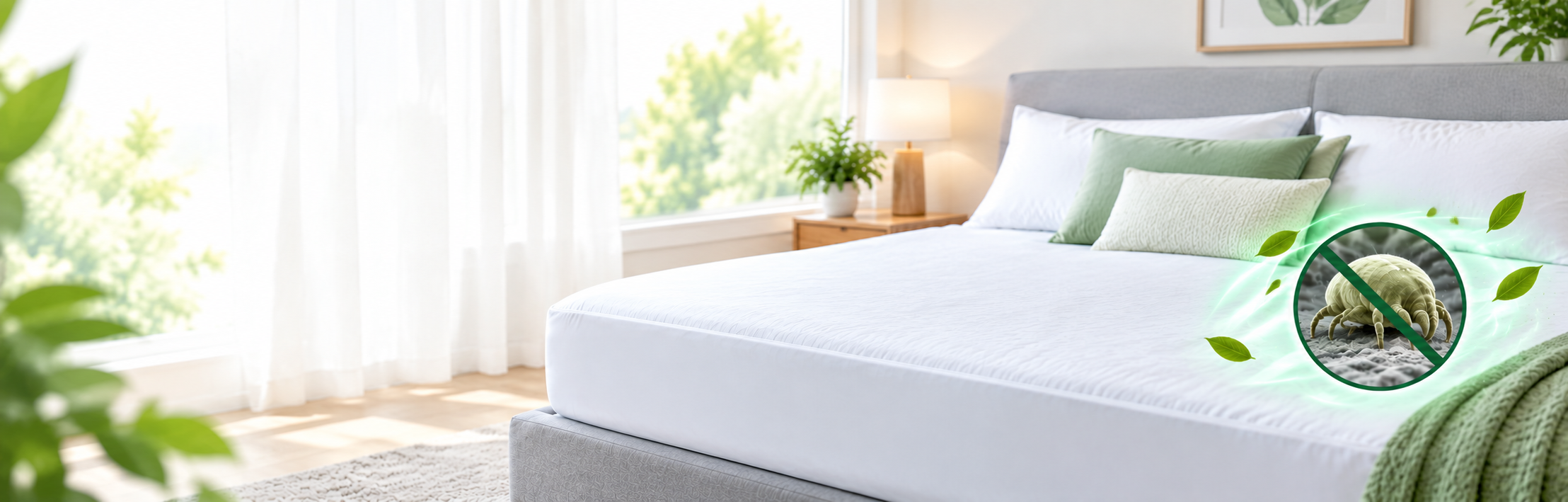
Dust mites are the most common bedroom allergy trigger. They can live in any quilt, natural or synthetic, so regular airing, washing where the label allows, and A protector on the mattress matter more than the fill type.
-
Down sold for bedding is cleaned before use. Some people still react to it or to dust trapped in it. A tightly woven cotton casing helps keep fill and dust inside the quilt.
-
Wool contains small amounts of lanolin, a natural grease. A small number of people are sensitive to it, though wool used in quilts is scoured to remove most of it.
If you or your family have confirmed allergies, ask your GP or allergist which fills to avoid. Non-animal alternatives include Tencel and microfibre quilts, such as the Protect a Bed Signature Tencel All Seasons Quilt, and our Bamboo Bedding Range. Our guide to Mattress protectors for Allergies and Dust Mites covers the most effective step for most allergy sufferers.
Care and Cleaning
How you care for a quilt has a big effect on how long it lasts and how well it keeps its loft. Always follow the care label, because methods differ between products.
Caring for a wool quilt
-
Use A Quilt Cover and wash the cover regularly, rather than washing the quilt itself often.
-
Air the quilt outside in the shade on a dry, breezy day every few weeks.
-
Spot clean small marks with a damp cloth and a mild wool detergent.
-
Only machine wash if the label says the quilt is washable. Unwashable wool can felt and shrink.
-
Shake the quilt when you make the bed to keep the fill evenly spread.
Caring for a down quilt
-
Use a quilt cover and shake the quilt daily to restore the loft.
-
Many down quilts can be washed, but a large-capacity machine or a professional laundry is often needed.
-
Dry it completely on low heat, with dryer balls or clean tennis balls to break up clumps. Damp down can develop a musty smell.
-
Store it in a breathable cotton bag, not a plastic one, when not in use.
Ethics and Sourcing
Both fills come from animals, so sourcing is a reasonable question to ask. For down, look for certification such as the Responsible Down Standard, which audits farms and supply chains for animal welfare. For wool, look for clear information on where the wool comes from and whether it is mulesing-free. Australian made wool quilts also tell you where the quilt itself was produced.
If you prefer to avoid animal products altogether, Tencel, bamboo-blend and microfibre quilts offer a similar range of weights without animal fibres.
Lifespan and Cost
Quality wool and down quilts can both last many years with good care. Cheaper down and feather mixes may flatten sooner, and feathers can begin to poke through the casing as the quilt ages. A wool quilt that has thinned or clumped in places, or a down quilt that no longer lofts after shaking and drying, is due for replacement.
Price varies widely with quality. Australian made wool quilts generally sit in the mid-price range, while high-quality goose down with a high down-to-feather ratio sits at the premium end. Down and feather blends cost less than pure down. When comparing, consider how many years of use you expect rather than the price alone.
Two Real Examples From Our Range
-
The Woolcomfort Australian made merino wool quilt (350GSM) is a mid-weight wool quilt made in Australia. It suits warm sleepers and households that want one quilt for most of the year.
-
The Giselle Bedding 800GSM goose down and feather quilt is a heavier winter quilt with the lofty feel of down. It suits cold sleepers and cooler bedrooms.
You can compare more quilts, covers and pillows in our full bedding range.
Which Should You Choose?
|
Choose wool if you |
Choose down if you |
|
Sleep hot or wake up sweaty |
Feel the cold or sleep in a cool room |
|
Want one quilt that works across the seasons |
Want maximum warmth with minimum weight |
|
Share a bed with someone whose temperature differs from yours |
Love a lofty, fluffy look and feel |
|
Like a closer, heavier drape |
Are happy to dry the quilt thoroughly after washing |
Whichever you choose, pair your quilt with a supportive pillow, such as the Luxor Australian made hotel quality pillow, for a complete setup. If you would like to feel the difference before buying, visit the Bedworld showroom in Osborne Park.
|
Health disclaimer: This article is general information about bedding and is not medical advice. If you have allergies, asthma, night sweats or another health condition, speak with your GP or allergist about which bedding materials are suitable for you. |
|
About the author Bedworld Sleep & Bedding Team is the in-store team at Bedworld, a family-owned Perth bedding retailer that has operated from its Osborne Park showroom for more than 20 years. The team helps WA customers choose quilts, pillows and bedding for every season, and writes these guides from the questions customers ask most often in store. Reviewed by: Anand, Sleep Expert with 25+ years of experience, Bedworld Osborne Park. Questions about this guide? Call the showroom on (08) 9242 4333 or email sales@bedworldonline.com.au. |