Cart
0
Bedworld's Verdict
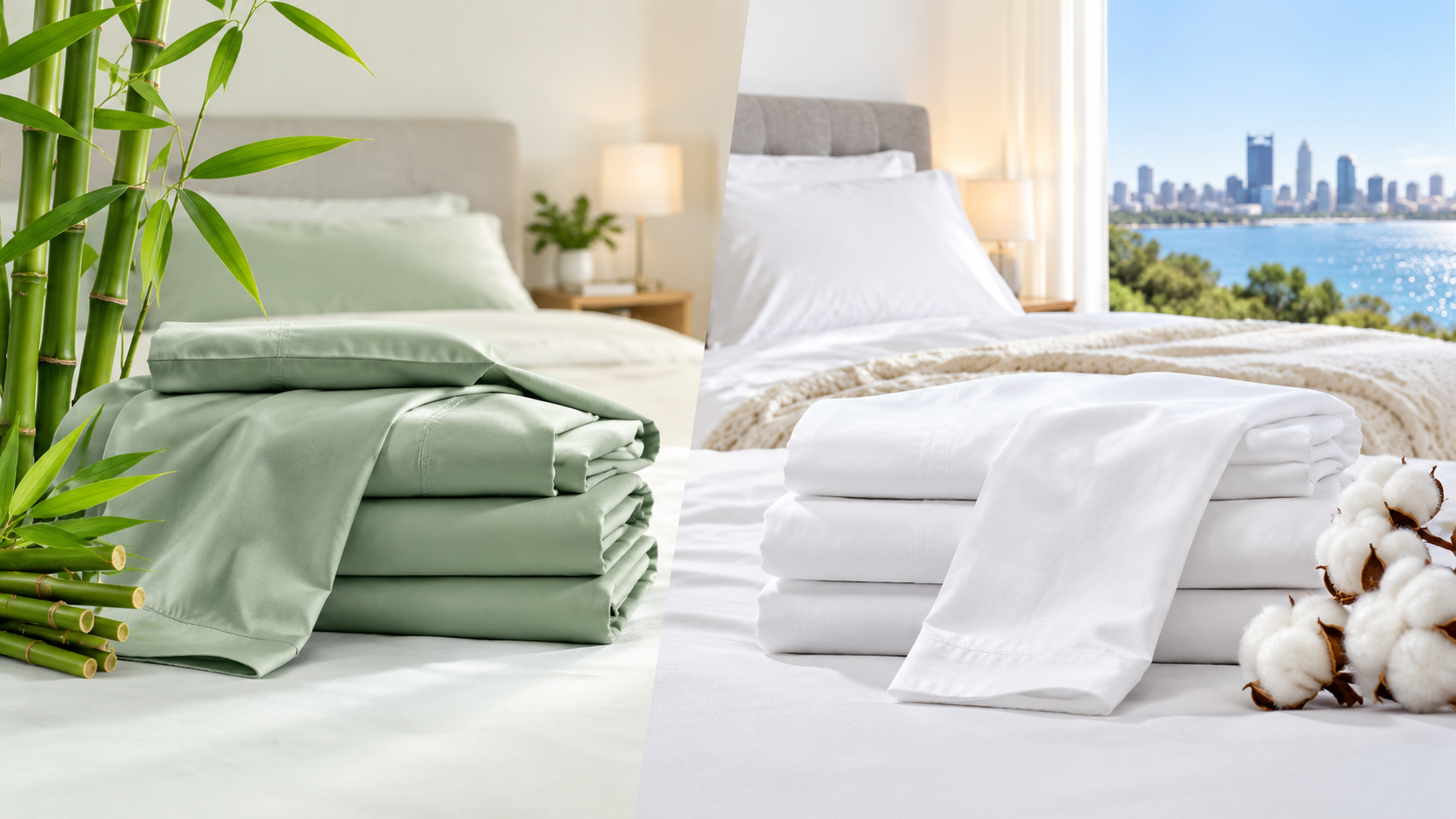
Bamboo sheets usually feel cooler and silkier against the skin and handle sweat well, which suits hot sleepers and people who run warm on humid nights. Cotton sheets, particularly a percale weave, are crisp, breathable, very durable and easier to care for, which suits people who want sheets that last for years and tolerate warmer washes. Neither is better for everyone. The weave, the quality of the fibre and how you sleep matter as much as the material on the label.
Why you can trust this guide
This guide was written by the Bedworld Sleep & Bedding Team, drawing on more than 20 years of helping Perth customers in our Osborne Park showroom, and reviewed by Anand, Sleep Expert with 25+ years of experience. Product details come from Bedworld's own product pages, and care advice follows manufacturer guidance.
Why Your Sheet Fabric Matters in a Perth Summer
If you have ever kicked the sheets off at 2am in the middle of a Perth January, you already know that bedding is not a small decision in Western Australia. The fabric against your skin for seven or eight hours a night affects how warm you feel, how much you sweat, and how quickly you fall back to sleep after you wake.
Bamboo and cotton are the two fabrics most Australians end up choosing between. Both are popular, both can be excellent, and both are marketed with claims that do not always hold up. As a Perth bedding retailer, we hear the same questions about them every summer. This guide explains what each fabric is made of, how they compare on breathability, softness, durability, care and price, and which one suits different kinds of sleepers through a hot WA summer and a cool, wet winter.
In this guide: what bamboo sheets are made of; what cotton sheets are made of; a side-by-side comparison; which feels cooler; winter; softness and sensitive skin; durability; washing and care; thread count; sustainability; price; which to choose; FAQs.
What Bamboo Sheets Are Actually Made Of
Bamboo is a hard, woody grass, so it cannot be spun into thread the way cotton can. To make sheets, the bamboo is broken down into cellulose pulp and then regenerated into fibre. That process is why most bamboo sheet labels say something like "bamboo viscose", "rayon from bamboo" or "bamboo lyocell".
-
Bamboo viscose (rayon) is the most common type. It produces a smooth, drapey fabric with a slight sheen and a cool touch.
-
Bamboo lyocell is made with a process that recovers and reuses most of its solvent. It feels similar to viscose, often with a little more strength.
-
Bamboo and cotton blends mix regenerated bamboo fibre with cotton, aiming to combine bamboo's softness with cotton's strength and structure.
Because the fibre is regenerated, some claims you will see about bamboo, such as natural antibacterial properties carried over from the plant, are hard to support for the finished fabric. When you compare bamboo sheets, look past the marketing and check three things on the label: the fibre type, the weave, and any independent textile certification such as OEKO-TEX, which tests fabric for harmful substances.
Bamboo is also used beyond sheets. Our bamboo bedding range includes toppers and protectors, such as the In Your Dreams Cooling Bamboo Mattress Protector, which brings the same cool, soft surface to the layer directly under your fitted sheet.
What Cotton Sheets Are Made Of
Cotton is a natural fibre picked from the seed pod of the cotton plant and spun directly into yarn. The quality of a cotton sheet depends mostly on the length of the fibre, called the staple. Longer staples make smoother, stronger yarn that pills less.
-
Egyptian and other long-staple cottons are prized for long fibres that produce a smooth, durable sheet.
-
Standard cotton has shorter fibres. It is comfortable but can feel rougher and wear faster.
-
Cotton blends such as polycotton add polyester for wrinkle resistance and a lower price, at the cost of some breathability.
The weave changes how cotton feels as much as the fibre does.
-
Percale is a simple one-over, one-under weave. It feels crisp and matte, like a well-pressed shirt, and it is one of the most breathable options for hot sleepers.
-
Sateen floats more threads on the surface, giving a smoother, silkier feel with a soft sheen. It drapes closer to the body and can feel slightly warmer than percale.

Bamboo vs Cotton at a Glance
|
Factor |
Bamboo (viscose or lyocell) |
Cotton (percale or sateen) |
|
Feel |
Silky, smooth, drapes closely |
Crisp (percale) or smooth (sateen) |
|
Cool to the touch |
Yes, noticeably on first contact |
Percale feels fresh; sateen less so |
|
Handling sweat |
Absorbs moisture well and feels less clammy |
Absorbs well; percale lets air through freely |
|
Durability |
Good when cared for; more delicate when wet |
Very good, especially long-staple cotton |
|
Wrinkling |
Moderate |
Percale wrinkles more; sateen less |
|
Washing |
Cool or warm gentle cycle, low heat |
Tolerates warmer washes and tumble drying |
|
Price |
Mid to premium |
Budget to premium, depending on fibre |
Which Feels Cooler on a Hot Perth Night?
Perth summers are hot and mostly dry, but nights after a run of very hot days can stay warm and still, and coastal suburbs pick up humidity when the sea breeze drops. Two different things make sheets feel cool, and bamboo and cotton are good at different ones.
The first is touch. Bamboo viscose has a smooth surface that draws heat away from the skin, so it feels cool when you first lie down. Cotton sateen has a similar effect to a lesser degree, while percale feels fresh rather than cold.
The second is airflow and moisture. When you are hot, you sweat. A sheet that absorbs that moisture and lets air move through it stops the clammy feeling that wakes people up. Bamboo fibre absorbs moisture readily, so it tends to feel drier against damp skin. Percale cotton has an open weave that lets air pass freely, which suits people who run hot and want the bed to breathe.
In practice, many hot sleepers are happiest with either bamboo or cotton percale and less happy with tightly woven sateen or polyester blends. If heat seems to build up from underneath you, the sheet is only part of the story. Memory foam can hold warmth, and our guide to staying cooler at night with a cooling mattress explains what helps at mattress level. For the whole bed, see our guide to choosing bedding for hot and cold sleepers.
|
Bedworld tip: When customers tell us they wake up hot, we ask what sits between them and the mattress. A plastic-backed protector under breathable sheets can cancel out the benefit of the sheets. Check every layer, not just the top one. |
What About Winter?
Perth winters are mild compared with the eastern states, but cold, damp nights between June and August still catch people out, especially in older brick homes. Neither bamboo nor cotton sheets are warm on their own. Warmth comes mostly from your quilt.
That said, cotton sateen and brushed cotton feel cosier to climb into on a cold night than bamboo's cool touch. Some people keep a bamboo set for summer and a cotton set for winter. Others use bamboo year-round and adjust the warmth with their quilt and a quilt cover set instead. If you change your bedding with the seasons, our article on adjusting your sleep setup between summer and autumn has practical tips.
Softness and Sensitive Skin
Bamboo sheets are known for softness from the first night. The fibre is smooth and the fabric drapes over the body rather than tenting, which many people with sensitive or dry skin find comfortable.
Good cotton gets softer with every wash. A new percale set can feel slightly stiff for the first few weeks before it relaxes. Sateen starts softer but can lose some of its sheen over time.
If you have eczema, allergies or very sensitive skin, the fibre type matters less than two other factors: the finishing chemicals used on the fabric and how clean the bed is kept. An independent certification such as OEKO-TEX and washing new sheets before first use are both sensible steps. Allergy triggers such as dust mites live mostly in mattresses and pillows rather than sheets, so a quality protector usually does more for allergy sufferers than a change of sheet fabric. Our guide to mattress protectors for allergies and dust mites covers what to look for.
Durability: Which Lasts Longer?
Long-staple cotton is one of the most durable sheet fabrics available. Percale in particular resists pilling and can last many years with regular washing. Cheaper short-staple cotton and polycotton blends pill sooner.
Regenerated bamboo fibres are softer but weaker when wet, which is why bamboo sheets come with gentler care instructions. Treated well, a good bamboo set lasts a long time. Washed hot, tumble-dried on high heat, or rubbed against rough fabrics in the machine, it can pill, thin or lose its sheen faster than cotton.
Signs that any sheet set needs replacing include thinning where you sleep, persistent pilling, holes, elastic on the fitted sheet that no longer grips, and fabric that stays stiff or scratchy even after washing.
Washing and Care
Care makes a bigger difference to how sheets feel after a year than the fibre itself. Always follow the care label, but these general rules apply.
Caring for bamboo sheets
-
Wash on a cool or warm gentle cycle with a mild liquid detergent.
-
Skip fabric softener, which coats the fibres and reduces how well they handle moisture.
-
Line dry in shade or tumble dry on low. Long periods in strong WA sun can fade colours.
-
Wash separately from towels and items with zips or Velcro that cause pilling.
Caring for cotton sheets
-
Cotton tolerates warmer washes, which helps remove body oils from pillowcases and fitted sheets.
-
Expect a little shrinkage on the first hot wash, especially with 100% cotton.
-
Line drying in the sun freshens cotton well, though it may feel crisper than tumble-dried sheets.
-
Remove promptly from the dryer and fold to reduce creasing, particularly with percale.
Washing sheets weekly is a good habit for both fabrics. Rotating between two sets also halves the wear on each one.
Thread Count: How Much Does It Matter?
Thread count is the number of threads woven into one square inch of fabric. It is the figure most often printed on packaging, and it is also the most misunderstood.
For cotton, roughly 300 to 500 in good long-staple yarn produces a comfortable, breathable sheet. Very high counts can be achieved by twisting thin threads together, which raises the number without necessarily making the sheet better. A denser, very high thread count sheet can also hold more heat, which most Perth sleepers do not want in summer.
For bamboo, thread count is a less useful quality guide because the fibre and weave behave differently. Fabric weight, fibre type and certification tell you more.
The 1000TC Egyptian cotton sheet set in our range is a premium high thread count cotton set. It suits people who prefer a dense, smooth sheet and sleep at a comfortable temperature, rather than very hot sleepers looking for maximum airflow.
Sustainability Claims
Both fabrics come with environmental marketing, and both have trade-offs. Bamboo grows quickly and usually needs little irrigation or pesticide, but turning it into viscose involves chemical processing, and the impact depends on how responsibly the factory manages those chemicals. Lyocell processes generally recover and reuse more of the solvent.
Conventional cotton uses a lot of water and, in many regions, pesticides. Organic cotton reduces chemical inputs, and long-staple cotton that lasts for years reduces how often sheets need replacing. If sustainability is a priority, look for certifications rather than broad claims, and choose sheets you will keep for a long time.
Price and Value
Bamboo sheets tend to sit in the mid to premium price range. Cotton covers a much wider range, from inexpensive polycotton to premium long-staple sets. When comparing value, think about cost per year of use. A well-made cotton percale set that lasts five or more years can work out cheaper than a lower-cost set replaced every eighteen months.
Getting the Rest of the Bed Right
The best sheets still disappoint if they do not fit. Modern mattresses, especially pillow tops and hybrids, are often deeper than older ones, and a protector or topper adds more height. Check the wall depth of the fitted sheet against your mattress height, and confirm your bed size with our guide to Australian bed sizes.
It also helps to protect the mattress underneath. A breathable mattress protector keeps sweat out of the mattress and is far easier to wash than the mattress itself.
Which Should You Choose?
|
Choose bamboo if you |
Choose cotton percale if you |
Choose cotton sateen if you |
|
Sleep hot or wake up sweaty, particularly on humid nights |
Run warm but prefer a crisp, matte feel |
Sleep at a comfortable temperature or feel the cold |
|
Love a silky, cool feel when you get into bed |
Want sheets that handle warm washes and last for years |
Want a smooth, hotel-style finish |
|
Are happy to wash gently and avoid high heat |
Like the fresh feel of line-dried sheets |
Prefer a fabric that wrinkles less than percale |
Many households end up with both: a bamboo or percale set for summer and a sateen set for winter. You can browse our full bedding range online, or visit the Bedworld showroom in Osborne Park to feel the fabrics side by side before you decide.
Health disclaimer:
This article is general information about bedding fabrics and is not medical advice. If you have eczema, allergies, asthma, night sweats or another health concern, speak with your GP, dermatologist or allergist before relying on a change of bedding to manage symptoms.About the author:
Bedworld Sleep & Bedding Team is the in-store team at Bedworld, a family-owned Perth bedding retailer that has operated from its Osborne Park showroom for more than 20 years. The team helps WA customers compare mattresses, bases, bedding and protectors every day, and writes these guides from the questions customers ask most often in store.Reviewed by: Anand, Sleep Expert with 25+ years of experience, Bedworld Osborne Park.
Questions about this guide? Call the showroom on (08) 9242 4333 or email sales@bedworldonline.com.au.