Cart
0
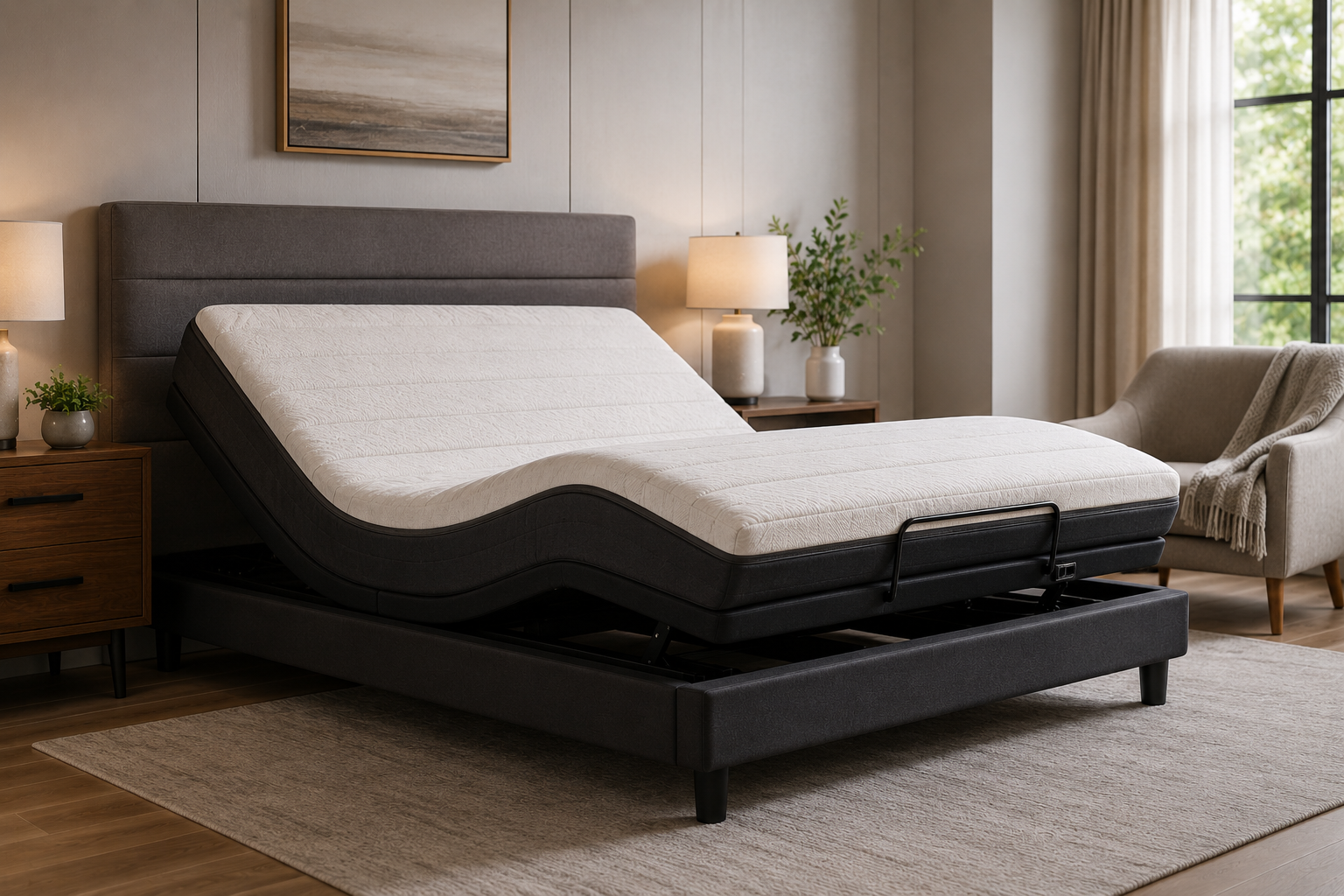
Adjustable beds have moved well past the hospital room. In Perth, more people are choosing them for everyday sleep, and the reasons go beyond comfort. Poor sleep position can quietly drive back pain, acid reflux, snoring, and morning stiffness, and a flat mattress offers no way to fix any of that. An Electric Adjustable Bed lets you change position with a remote, placing your body in a posture that actually supports the way you sleep.
The Australian adjustable bed market is forecast to grow at approximately 5.8% CAGR from 2025 to 2031, and over 1,400 Australian consumers have already reviewed adjustable bed products on ProductReview as of 2026. Demand is climbing, and so is the variety of options available to Perth shoppers.
This guide covers the full picture. It covers features, health considerations, mattress compatibility, and what makes a Perth-specific purchase different from shopping online without local knowledge.
Key Takeaways
-
Adjustable beds let you raise your head or feet independently, which can reduce back pain, ease reflux, and improve breathing during sleep.
-
A 2025 clinical study of 44 participants and 1,267 nights found a 26% improvement in perceived sleep quality with a multi-feature adjustable base.
-
Mattress compatibility is one of the most overlooked parts of buying an adjustable bed, and the wrong pairing can void your warranty.
-
Seeing the bed in a Perth showroom before buying lets you test motors, remote functions, and mattress feel together before committing.
What Does an Adjustable Bed Actually Do?
Adjustable beds are motorized bases that raise and lower the head and foot sections independently. A basic remote controls the angles, and more advanced models include massage functions, USB charging ports, wall-hugging movement, and split-zone settings for couples.
The key difference from a standard bed base is mechanical control over sleeping position. A flat bed holds you in one position all night. An adjustable base lets you fine-tune that position to reduce pressure on specific parts of your body, which becomes more useful as you age or manage a physical condition.
Single Motor vs. Dual Motor Bases
Most entry-level models use a single motor, which raises the head and foot together. Dual motor bases control both sections independently, giving you far more flexibility. For couples with different sleep needs, a split adjustable base means both sides move separately without disturbing the other person.
The choice between Single and Dual Motor Electric Adjustable Beds comes down to budget and how many positions you actually plan to use. A single motor suits most solo sleepers. A dual motor is worth considering for shared beds or anyone with specific spinal or respiratory needs.
What Are the Health and Sleep Benefits Worth Knowing?
A lot of adjustable bed marketing leans on vague wellness claims. The research behind specific positions is more grounded than most advertising lets on.
Back Pain and Spinal Alignment
Lying flat puts pressure on lumbar discs. Raising the head section by 30 to 45 degrees reduces that pressure, particularly for people with lower back conditions. A 2025 sleep study involving 44 participants and 1,267 nights reported a 45% reduction in reported back pain when using a multi-feature adjustable base. That is a significant clinical outcome, not just a feature benefit.
A poor sleep surface contributes to lower back pain and spinal stress. An adjustable base works best when it is paired with the right mattress firmness for your body type.
Breathing and Sleep Apnoea
A mild head-of-bed elevation reduces respiratory disturbance and apnoea-hypopnoea measures in people with sleep-disordered breathing, according to a 2025 clinical study. For people who use a CPAP but struggle with positional symptoms, adjustable bases are increasingly used as a complementary support.
Acid Reflux and Digestion
Elevating the upper body keeps stomach acid from traveling back up the esophagus during sleep. This positional approach to managing reflux is well-documented and does not require medication adjustments. An angle of around 6 to 8 inches of head elevation is generally recommended.
Circulation and Leg Swelling
Raising the foot section above heart level helps venous return, which reduces swelling in the lower legs and feet. People managing fluid retention, varicose veins, or recovery from surgery often find this position relieves discomfort faster than lying flat. The Health Benefits of Electric Adjustable Beds extend well beyond sleep quality.
What Features Should You Compare Before Buying?
Adjustable beds vary enormously in what they offer. Knowing which features actually get used every night helps narrow down the options without overpaying for functions you will never touch.
Here are the core features to assess before committing:
-
Head and foot adjustment range: Look for a head section that raises to at least 60 degrees. Some bases stop at 45, which limits position options.
-
Wall-hugging movement: The base slides back as the head rises, so your pillow stays close to the bedside table. Non-wall-hugging models push you forward as you recline.
-
Wireless remote vs. app control: Most bases include a handheld remote. Some models add Bluetooth or Wi-Fi app control. Check whether the remote has a backlight for night use.
-
Massage zones: Some bases include vibration motors under the head and foot sections. These vary in quality. Test them in person before purchasing.
-
Under-bed clearance: Motorized components reduce the space under the base. Check the clearance height if you store items underneath your bed.
-
Weight capacity: Most residential adjustable bases support between 250 and 350 kilograms. Confirm the rated capacity for the specific model.
The Adjustable Bed Features Explained in detail can help you compare technical specs across models at a similar price point.
Which Mattress Works With an Adjustable Base?
This is where many buyers make an expensive mistake. Placing the wrong mattress on an adjustable base can damage the mattress, invalidate the warranty, or simply not work because the material is too rigid to flex.
Mattress Types That Are Compatible
-
Memory foam: Highly flexible, conforms well to position changes, and does not resist bending. One of the most commonly paired materials with adjustable bases.
-
Latex: Works well on adjustable bases as long as the latex layer is not excessively thick or stiff. Natural latex tends to flex better than synthetic blends.
-
Pocket spring with flexible layer: Some pocket spring mattresses are built specifically for adjustable bases. The springs must be individually pocketed, and the border wire must be flexible rather than rigid.
-
Hybrid mattresses with foam layers: These work well as long as the coil gauge is not too heavy and the top layers are foam-based.
What to Avoid
Innerspring mattresses with a solid border wire, thick latex slabs, and mattresses with a rigid foam perimeter will crack or deform on an adjustable base. The wrong mattress will also prevent the base from reaching full flex angles.
A complete breakdown of mattress compatibility for adjustable beds covers this in detail, including brand-specific guidance for Perth shoppers.
The MLILY iActive range is built specifically for adjustable base use. The DreamFlex adjustable base pairs with compatible mattresses that can handle repeated flexing over thousands of cycles.
Who Benefits Most from an Adjustable Bed in Perth?
Adjustable beds suit a wide range of people, but certain groups gain the most consistent benefit from them.
Older Adults and Those Managing Chronic Conditions
Adjustable beds for the elderly address a real daily need. Getting in and out of a flat bed becomes harder with age, and the foot elevation feature significantly helps those managing circulation issues or post-surgical recovery. The head elevation setting helps with reflux and breathing, which are common concerns for older adults.
Orthopedic electric adjustable beds are a practical sleep solution for seniors who want more control over their sleeping position without relying on a stack of pillows.
Health-Conscious Buyers and Lifestyle Upgraders
Adjustable beds are not just a medical product. Plenty of Perth buyers invest in them for comfort reasons, reading in bed, watching television, or working from a reclined position at night. The zero-gravity position, where both the head and knees are elevated, is one of the most popular settings among lifestyle buyers. It distributes bodyweight evenly and takes pressure off the spine entirely.
Couples With Different Sleep Needs
A split adjustable base means two people can set completely different head and foot angles without feeling each other move. This resolves one of the most common complaints among couples sharing a bed. The Split vs. Standard Adjustable Bed comparison is worth reading if you are buying for a shared bed.
What Does the Perth Market Look Like for Adjustable Beds?
Perth buyers have a few advantages over online-only shoppers. Local showrooms allow you to test the motor noise, feel the remote response, and lie on the combined mattress and base before committing. Motor noise in particular is hard to assess from a product description. Some bases are noticeably louder than others, and that matters if you are a light sleeper or share a room.
The global adjustable bed base market was estimated at USD 4.44 billion in 2025 and is forecast to reach USD 4.69 billion in 2026. Local Perth availability has improved significantly alongside that global growth, with more brands offering direct delivery and in-store demonstration.
Delivery is a practical consideration in Perth. Metro delivery times and ground-floor access requirements vary by retailer. When buying locally, confirm whether the delivery team will position the base in your room and whether assembly is included. Delivery takes 1 to 7 days. Buy in store or online. Free Metro ground floor delivery (T&Cs apply).
For an honest comparison of Adjustable vs Traditional Beds, the long-term cost case for an adjustable base becomes clearer when you factor in mattress lifespan and ongoing health outcomes.
How Do You Care for an Adjustable Bed Over Time?
Adjustable beds are mechanical products, and like any motorized item, they need basic maintenance to stay reliable.
A few straightforward habits extend the lifespan significantly:
-
Keep the base clear of debris: Dust and lint accumulate in motor housing and hinge points. Vacuum under the base every few months.
-
Check remote battery contacts: Corrosion on remote contacts is a common cause of response delays. Replace batteries annually even if they still work.
-
Avoid forcing the base against the wall: Wall-hugging models slide back during adjustment. Forcing the base into a fixed wall position can strain the motor.
-
Rotate the mattress regularly: Flexible mattresses on adjustable bases can develop body impressions faster than on flat bases. Rotating head to foot every three to four months evens out wear.
-
Inspect hinge points annually: Most bases have plastic or metal pivot points. Check for cracking or misalignment, particularly after any unusual noise during adjustment.
Full guidance on Adjustable Bed Maintenance covers motor care and what to check before calling for a repair.