Cart
0
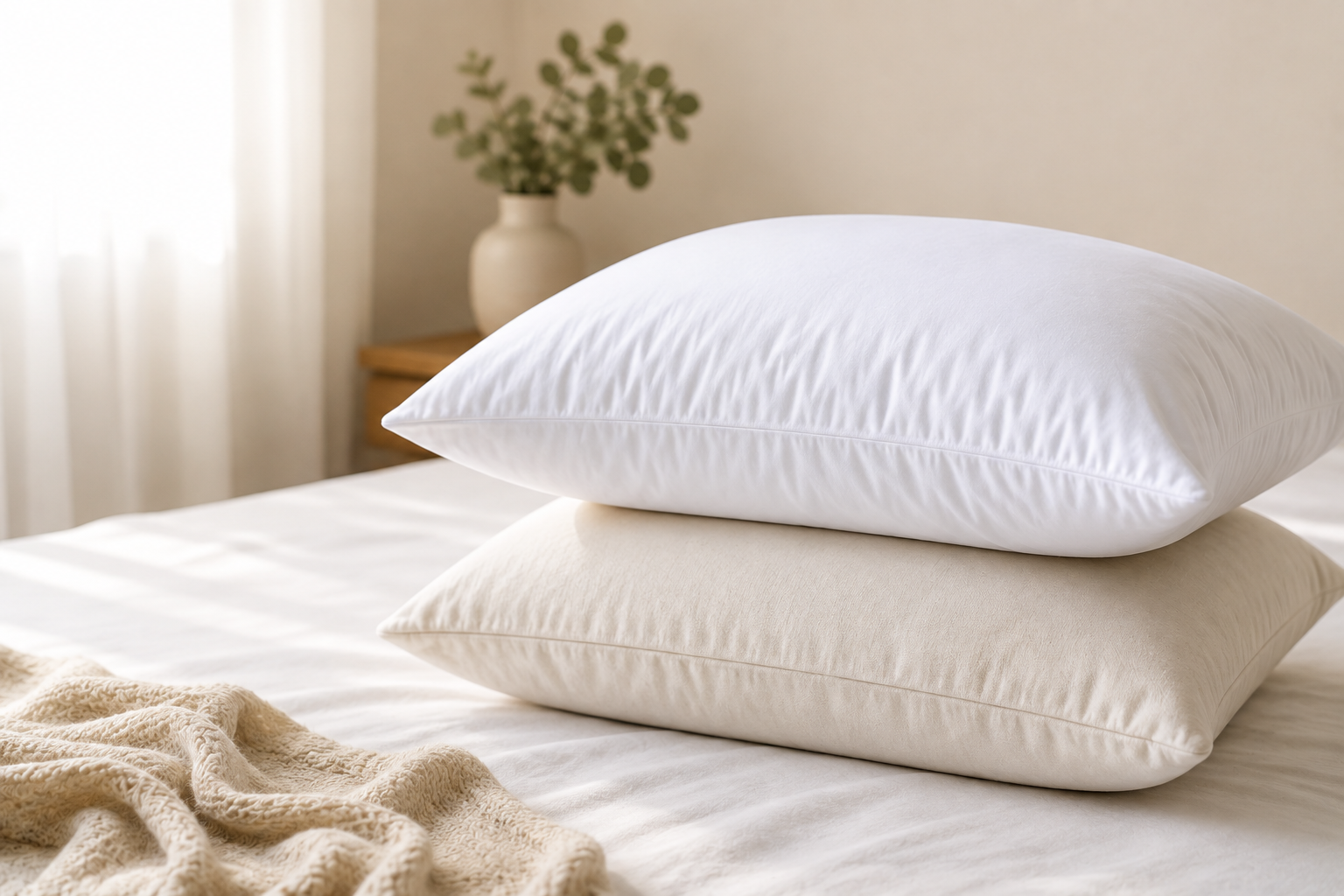
How Often Should You Replace Your Pillow?
There is no single replacement date that applies to every pillow. A pillow's useful life depends on its fill, construction, how often it is used, how it is cleaned and protected, and whether it still provides the support you need.
As a practical starting point, inspect your pillow regularly rather than replacing it simply because it has reached a particular age. Bedworld's pillow collection includes different materials, profiles and comfort styles if yours is no longer performing well.
The most important question is not just, How old is my pillow? but Does it still provide the shape, cleanliness and support I need? A pillow that has become permanently flat, lumpy, stained or difficult to keep clean may need replacing sooner than a well-maintained pillow that still holds its shape.
A Quick Pillow Replacement Checklist
It stays flat or folded after you release it.
The fill has developed persistent lumps or thin spots.
It has a persistent odour or heavy staining that cleaning does not resolve.
You regularly fold or stack it to create enough height.
You wake with neck or shoulder discomfort and your pillow no longer feels supportive.
The pillow's care instructions can no longer be followed effectively because of its condition.
How Long Does a Pillow Last?
Pillow lifespan varies substantially by construction. Rather than treating the following periods as guarantees, use them as general inspection windows and always follow the care instructions supplied with the individual product.
|
Pillow type |
Typical consideration |
What to watch for |
|
Polyester / microfibre |
Often needs earlier replacement when used nightly |
Loss of loft, clumping and flattening |
|
Down / feather |
Can remain comfortable for years with appropriate care |
Compression, loss of resilience and condition |
|
Memory foam |
Often holds its shape longer than loose-fill pillows |
Permanent compression, surface deterioration and care limitations |
|
Latex / latex-like foam |
Often resilient when properly cared for |
Loss of resilience, damage or deterioration |
|
Bamboo-labelled / blended fills |
Lifespan depends on the actual fill and construction |
Flattening, clumping and loss of support |
There is no reliable rule that one material will always last a specific number of years. Manufacturer instructions, construction quality and real-world condition matter more than a simple lifespan number.
What Are the Signs Your Pillow Needs Replacing?
Your pillow can show clear signs of wear before it reaches the end of a nominal lifespan. A few simple checks can help.
1. It stays folded or flattened
If your pillow no longer rebounds after being folded, pressed or fluffed, its fill may have lost resilience. This is particularly useful as a quick comparison test for loose-fill pillows; it is not a universal test for every foam construction.
2. You can feel lumps or thin areas
Uneven filling can create inconsistent support. If you are constantly moving the fill around or folding the pillow to create a comfortable position, it may be time to compare a replacement.
3. Odour or staining persists after appropriate cleaning
Pillows are exposed to perspiration, skin oils and everyday moisture. Follow the manufacturer's care instructions. If the pillow remains noticeably stained or smells unpleasant after appropriate cleaning and drying, replacement may be more practical.
4. Your pillow no longer matches your sleeping position
A pillow can become unsuitable even when it is not visibly damaged. Changes in mattress firmness, sleeping position or personal preference can change the amount of loft you need.
Healthdirect notes that sleeping with the wrong type of pillow can contribute to neck pain and recommends a supportive pillow that keeps the head and neck in a natural position.
Does an Old Pillow Affect Hygiene and Allergens?
Pillows can accumulate sweat, skin debris, dust and other household allergens over time. For people who are sensitive to house dust mites, bedding is particularly relevant.
The Australasian Society of Clinical Immunology and Allergy (ASCIA) identifies house dust mites as common allergens and recommends practical bedroom measures including regular bedding washing and dust-mite-resistant covers for pillows and mattresses.
A Pillow protector can add a washable barrier between the pillow and everyday perspiration, skin oils and moisture. It does not make a pillow allergen-proof, so regular cleaning and appropriate replacement still matter.
How to Care for Your Pillow and Extend Its Useful Life
-
Use a suitable pillow protector from the beginning and wash it according to its care instructions.
-
Wash the pillow only when the manufacturer says it is washable. Foam pillows commonly require different care from washable fibre-filled pillows.
-
Dry the pillow completely before putting it back on the bed.
-
Change pillowcases regularly.
-
Fluff or air pillows according to the manufacturer's instructions rather than using excessive heat or aggressive cleaning.
-
Store spare pillows somewhere clean, dry and breathable.
For more guidance on selecting pillows and protectors, see Bedworld's Pillow & Mattress Protector Buying Guide.
How Often Should You Wash a Pillow?
There is no universal washing schedule for every pillow. The correct frequency depends on the fill, cover and manufacturer's care instructions. Some removable covers can be washed regularly while the inner pillow requires a different cleaning method.
Do not machine-wash memory foam or other specialist fills unless the product instructions specifically permit it. Incorrect washing can damage the material and may shorten the pillow's useful life.
For people concerned about dust mites, ASCIA recommends washing bedding such as pillowcases regularly and using dust-mite-resistant covers on pillows and mattresses as part of allergen-minimisation measures.
Does Pillow Type Change When You Should Replace It?
Yes, but material alone should not determine replacement. Construction, resilience, care and your actual comfort are more useful indicators.
Memory foam pillows
Memory foam can provide consistent contouring, but it should be cleaned according to the manufacturer's instructions. Replace it when it develops permanent deformation, damage or no longer provides the support you need.

Latex and latex-like pillows
Latex and latex-like foams can be resilient, but they still require appropriate care. Inspect them for loss of resilience, deterioration or damage rather than relying on a fixed replacement date.

Down, feather and fibre pillows
Loose-fill pillows can be fluffed and may respond well to appropriate cleaning, but repeated compression can eventually reduce loft. Persistent clumping, flattening or loss of comfort are better replacement signals than age alone.

Your Mattress Can Change the Pillow You Need
A pillow does not work in isolation. Your mattress firmness affects how far your shoulder sinks into the surface, which changes the gap your pillow needs to fill.
If you are replacing your pillow because your overall sleep setup has changed, it can be useful to compare your Mattress Options at the same time.
Sleeping position matters too. Side sleepers generally need more loft than stomach sleepers because the shoulder creates a larger gap between the head and mattress. Back sleepers often prefer a more moderate profile. The exact height depends on your body shape, mattress and comfort preference.
If you are unsure where to start, read the Pillow Buying Guide for guidance on pillow height, materials and sleep position.
When Should You Replace Your Pillow? A Simple Decision
|
If this is happening... |
Consider... |
|
The pillow is permanently flat or lumpy |
Replacing it |
|
You need to fold or stack it for support |
Comparing a different profile or replacement |
|
It has persistent odour or staining |
Replacing it after checking care options |
|
Your neck feels uncomfortable in the morning |
Reviewing pillow height, firmness and sleeping position |
|
The pillow is still supportive and in good condition |
Continuing appropriate care and monitoring it |
Choosing a Replacement Pillow at Bedworld
When you are ready to replace your pillow, start with your sleeping position, preferred feel and the height that keeps your head and neck comfortable. Then compare materials and construction rather than choosing purely on price.
You can Shop pillows in Perth online and compare the available styles and materials.
If you prefer to test pillows before buying, visit Bedworld Osborne Park and check current in-store availability.
Why Buy a Pillow Protector at the Same Time?
A pillow protector is a simple addition to a new pillow because it provides a washable layer between the pillow and everyday moisture, perspiration and skin oils. For people managing confirmed dust-mite sensitivity, ASCIA also recommends dust-mite-resistant pillow and mattress covers as part of allergen minimisation.
Browse pillow protectors to compare the available protection options.
Visit Bedworld Osborne Park
If you want to compare pillow profiles and materials in person, Bedworld's Osborne Park showroom provides a local option for Perth shoppers. Check the individual product page or contact the store to confirm whether a specific pillow is currently available to test.
Rear of Orbit Fitness, 2/443 Scarborough Beach Rd, Osborne Park WA 6017, Australia
Phone: (08) 9242 4333
For delivery information, see Perth Metro Delivery.
Final Thoughts
The best time to replace a pillow is when it has stopped doing its job effectively, not simply when it reaches an arbitrary age. Check its shape, cleanliness, condition and support, and consider whether it still matches your sleeping position and mattress.
When you are ready for a replacement, Bedworld offers pillows, protectors and other bedroom products online and from its Perth showroom.
Author / Reviewer
Written by: Bedworld Sleep Team
Reviewed by: Bedworld team member with verified product knowledge
Last reviewed: September 2026
Editorial note: This article provides general information about pillow care and selection. It is not medical advice. People with persistent pain, allergies, asthma or other health concerns should seek advice from an appropriate healthcare professional.