Cart
0

You tested it carefully. You lay on it for a few minutes in the showroom and it felt just right. Then it arrived home and it's a completely different story. The mattress is too firm, too soft, or just nothing like you remember. You're not imagining it, and you're certainly not alone.
This is one of the most common frustrations in mattress buying and the reasons behind it are genuinely interesting. Understanding why the in-store experience rarely translates perfectly to home is the first step toward fixing the problem, or avoiding it entirely next time around.

1 The Showroom Is a Controlled Environment - Your Bedroom Isn't
Walk into any bedding showroom and you'll notice it immediately: the lighting is warm, the temperature is comfortable, and there's a quiet calm about the space. These conditions aren't accidental. A relaxed, comfortable environment lowers your physical tension, which directly affects how a mattress feels beneath you.
At home, the conditions are completely different. Your bedroom might run warmer at night, feel more stressful after a long day at work, or have a different ambient temperature depending on the season. All of these factors change how your muscles hold tension, how your body weight is distributed, and ultimately how firm or soft the sleeping surface feels.
The environment you test a mattress in will never perfectly replicate the one you sleep in. Knowing this going in helps set realistic expectations from the start.
2 Showroom Mattresses Are Already Broken In
This is one of the most significant and least talked about reasons for the disconnect. The mattress you tested in the showroom has likely been on display for weeks, or even months. During that time, dozens of customers have laid on it, and the foam layers and springs have already gone through their initial compression and settling phase.
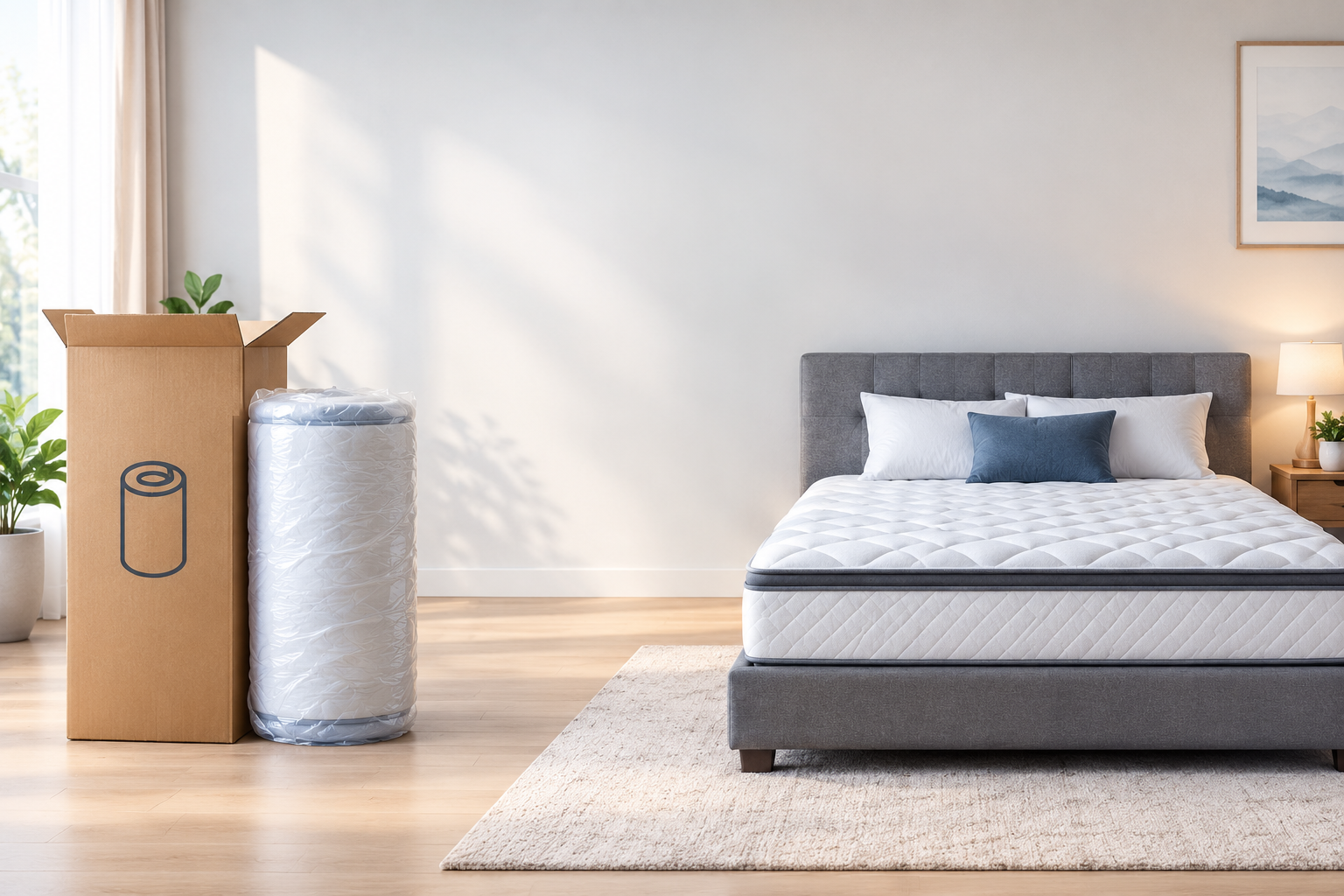
Your brand-new mattress arrives factory-fresh. The foams are denser, the springs are tighter, and the materials haven't yet adapted to a sleeper's weight and body shape. Most quality mattresses require a genuine break-in period, typically two to four weeks, before they start performing the way they're designed to.
The showroom mattress felt perfect because it already had weeks of use behind it. Yours needs time to catch up and that's completely normal.
If you've only had your mattress for a week or two and it feels firmer than expected, patience is often the right first response. A dedicated guide to mattress break-in periods and what to expect week by week would be a genuinely useful resource for new buyers.
3 The Base Underneath Makes a Bigger Difference Than Most People Realise
Showrooms pair their display mattresses with specific, purpose-matched bases. Those bases are chosen to showcase the mattress at its best correct slat spacing, proper surface tension, optimal flex. When you bring the mattress home and place it on a different base , an old ensemble, a frame with widely spaced slats, or a solid platform, the feel changes completely.
A mattress placed on a base with slats spaced more than 7–8 cm apart can feel noticeably firmer, because the surface has nowhere to flex under your weight. A worn-out ensemble base with soft spots will make even a firm mattress feel uneven. This is covered in detail in our guide on How The Wrong Bed Base Affects your Mattress Comfort and Support.
Before assuming there's anything wrong with your mattress, it's worth auditing the base it's sitting on. If you're using an older frame or a different base from the one the mattress was displayed on, that's very likely contributing to the change in feel.
What You Experienced in the Store vs What's Happening at Home
In the Showroom
- Mattress already broken in by foot traffic
- Paired with a purpose-matched display base
- Climate-controlled, relaxing environment
- Light display bedding, minimal insulation
- Tested lying on your back for a few minutes
- Low physical or mental tension at test time
At Home
- Brand new - foams and springs not yet settled
- Placed on an existing or mismatched base
- Real-world bedroom temperature and humidity
- Heavier bedding adding pressure and warmth
- Sleeping for 7–8 hours in natural positions
- End-of-day fatigue and body tension present
4 You Didn't Test It the Way You Actually Sleep
In a showroom, most people spend a few minutes lying on their back and maybe rolling onto one side briefly. That's understandable, it feels awkward to fully commit to a sleep test in a public space. But back sleeping for three minutes is nothing like side sleeping for three hours.
Different sleep positions load the mattress differently. Side sleepers put concentrated pressure on the hips and shoulders and a mattress that felt fine on your back may create pressure points when you're in your natural sleeping position for an extended stretch. Stomach sleepers put significant stress on the lumbar region in ways that a brief in-store test simply can't reveal.
The mismatch between how you tested and how you sleep is one of the most honest reasons why a mattress feels different at home. Reading about How your Sleeping position and Mattress Choice Directly Affect Back and Neck Pain can help you understand what your body actually needs and what to look for next time.
5 Your Bedding Setup Is Changing How the Mattress Feels
Showrooms typically dress their display beds with minimal, lightweight layers, often just a light duvet and a flat sheet. At home, you may be sleeping with a heavy winter doona, a thick mattress topper, or multiple layers of bedding that change the feel of the surface entirely.
A thick memory foam topper over a firm mattress can make the whole setup feel significantly softer. A heavy doona adds insulating warmth that can make an already-warm foam mattress feel uncomfortably hot. Even your pillow height affects how your weight distributes across the mattress.
Quick adjustment worth trying Strip: The bed back to the mattress and a single cotton sheet and lie on it for a few minutes. If it feels significantly closer to the showroom experience, your bedding setup, rather than the mattress itself, is likely the main variable at play.
If the feel is still off even with minimal bedding, consider whether a purpose-designed topper could bridge the gap between what you're feeling and what you expected. A thin cooling topper can help with heat retention, while a denser foam topper can add the softness a firm mattress lacks.
6 What You Can Actually Do About It
If your mattress still doesn't feel right after a couple of weeks, there are several practical steps to try before drawing any conclusions about the mattress itself.
- Give it time. Allow a full 30 days before making a final judgement. Most foam mattresses need this break-in period to reach their intended feel.
- Check your base. Inspect slat spacing, look for broken supports, and confirm the base is compatible with your mattress type. A well-constructed bed frame with appropriate slat spacing can transform how a mattress performs.
- Rotate the mattress. If you've been sleeping in the same spot, rotating 180 degrees can even out the feel and encourage more uniform settling.
- Adjust your bedding. Adjust your bedding. Swap out heavy layers and see if a lighter setup brings the mattress closer to how it felt in the showroom.
- Try a topper. If the mattress is genuinely firmer than expected, a softer comfort layer on top can adjust the feel without replacing the mattress entirely.
- Review your pillow. A pillow that's too high or too flat throws off your spinal alignment, which changes how you perceive the mattress underneath. A compatible support pillow is a simple fix that's often overlooked.
Still not right after 30–60 days? If none of these adjustments improve things, the issue may be a genuine mismatch between the mattress firmness and your body type or sleep style not a defect. Understanding How to Choose a Mattress That Truly Suits your Needs is worth revisiting before your next purchase.
7 How to Buy More Confidently Next Time
The best way to avoid this situation in the future is to change how you test in the showroom. Take your time - spend at least 10–15 minutes on each mattress you're seriously considering, in your actual sleeping position. Bring your own pillow if possible. Ask about the base the mattress is sitting on, and confirm whether it's the same type you'll be using at home.
It's also worth understanding the types of mattresses available and how each behaves. Pocket spring designs tend to feel consistent and breathable, while Gel-Infused Foam Options can run warmer and require more break-in time. Knowing the difference before you walk into a showroom puts you in a much stronger position to choose well.
If you're replacing an old mattress and wondering whether your sleep issues come from the mattress or something else, Recognising The Signs That a Mattress is Genuinely Causing Discomfort can help clarify the picture before you invest.
TIP 01: Test in your sleep position
Spend 10+ minutes on the mattress in your natural sleeping position — not just on your back.
TIP 02: Ask about the display base
Confirm whether the showroom base matches what you'll use at home — it matters more than most people expect.
TIP 03: Consider a matched package
A mattress and base paired together removes the guesswork around compatibility from day one.
TIP 04: Budget for a break-in period
Don't judge a new mattress in the first two weeks. Give it a full month before making any decisions.
Find a Mattress That Feels Right - Every Night
Browse Bedworld's full range of mattresses, bases, and toppers and shop with the confidence of knowing exactly what to look for.