Cart
0
You've just unboxed your brand new mattress, set it up, and then, there it is. That distinct chemical-like smell that wasn't quite what you were expecting. If this sounds familiar, you're not alone. New mattress odour is one of the most commonly asked about topics among Australians upgrading their sleep setup, and the good news is that it's almost always completely harmless.
In this guide, we'll walk you through exactly why new mattresses smell, which types are most affected, how long you can expect it to last, and the simple steps you can take to get rid of it quickly so you can enjoy a great night's sleep.
What Causes the Smell in a New Mattress?
The primary cause of that distinctive new mattress odour is a process called off-gassing. When a mattress is manufactured, it contains a range of materials - foams, adhesives, fire retardants, and fabric treatments, that have been compressed or sealed during packaging. Once the mattress is unwrapped and exposed to air, these materials begin to release volatile organic compounds (VOCs) as gases.
Think of it as similar to the "new car smell" a combination of materials releasing gases as they breathe for the first time. It's not a sign that anything is wrong with your mattress. It's simply a natural part of how modern sleep products are made.
Which Materials Produce the Most Off-Gassing?
Not all mattresses off-gas equally. Here are the main materials and how they contribute to the smell:
- Memory foam and polyurethane foam: These are the biggest contributors to off-gassing. They contain more chemical compounds, including isocyanates and polyols, that release as gases when exposed to air. If you've Purchased a Cooling Gel Memory Foam Mattress, you may notice the smell is slightly more pronounced in the first few days.
- Adhesives and bonding agents: The glue-like materials used to bond different layers of a mattress together can also contribute to the initial odour.
- Fire retardant treatments: Australian mattresses are required to meet fire safety standards, and the chemical treatments used for this can contribute a small amount to the smell.
- Fabric treatments and dyes: The covers and ticking on your mattress are often treated with protective coatings that can also have a faint odour when new.
- Latex: Natural latex mattresses have a distinct smell too, though it's often described as more earthy or rubbery rather than chemical. It's natural and typically fades quickly. You can explore our range of latex mattresses if you prefer a lower-chemical option.
- Innerspring mattresses: These generally off-gas the least, as the steel coil construction contains fewer chemical compounds than foam alternatives.
Is New Mattress Off-Gassing Safe?
For the vast majority of people, the odour from off-gassing is completely safe. The levels of VOCs released by modern mattresses are very low and well within accepted safety standards. Reputable manufacturers take care to use materials that meet rigorous health and safety guidelines.
That said, if you or someone in your household has asthma, chemical sensitivities, or is prone to allergies, you may want to be a little more cautious. Sleeping in a poorly ventilated room with a heavily off-gassing mattress on the first night is unlikely to cause serious harm, but it could trigger mild irritation for sensitive individuals. The simple solution is to air the mattress out before use, which we'll cover shortly.
If you're buying for a child's room, consider a pocket spring mattress, which tends to have lower off-gassing than dense foam options. You might also find our range of children's sleep guides and mattress selection tips for kids helpful when setting up a little one's bedroom.
How Long Does the New Mattress Smell Last?
This is one of the most common questions people ask, and the honest answer is: it depends on the mattress type and how you ventilate it.
- Most foam mattresses: The smell typically fades within 24 to 72 hours with good airflow.
- Dense memory foam or gel foam models: These can take anywhere from a week to two weeks to fully off-gas, especially if the room has limited ventilation.
- Latex mattresses: The natural rubbery scent usually dissipates within a few days.
- Innerspring and pocket spring mattresses: Off-gassing is minimal and often clears within hours.
The single biggest factor in how quickly the smell clears is airflow. A mattress sitting in a closed, stuffy room will hold onto its odour far longer than one placed in a well-ventilated space.
Safe and Practical Solutions to Remove the Smell
The good news is that you don't have to just wait it out. There are several simple things you can do to speed up the process and make your bedroom smell fresh again.
1. Unbox and Unroll in a Well-Ventilated Room
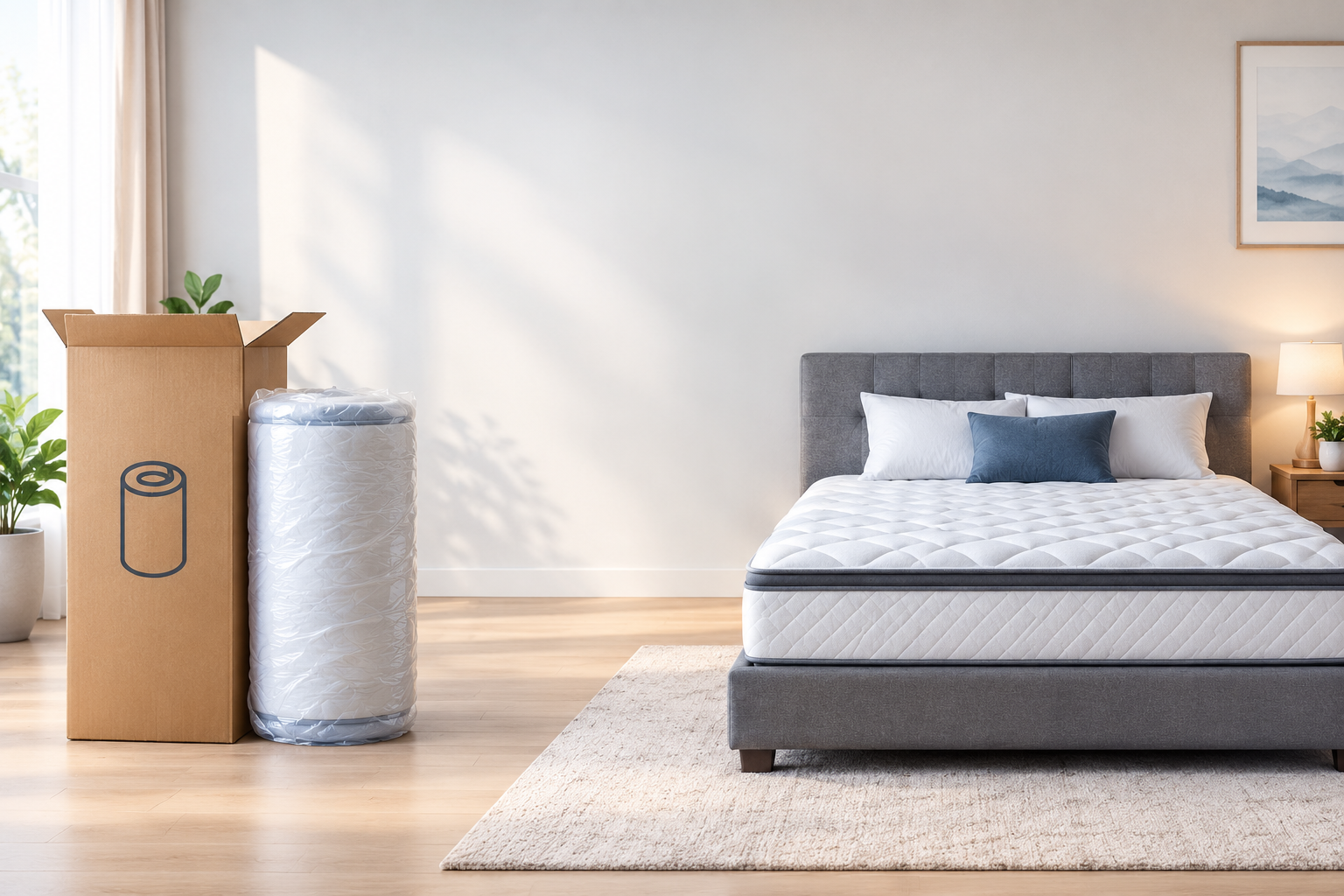
As soon as your mattress arrives, remove all packaging immediately. Don't leave it wrapped up, the sooner the mattress gets exposed to fresh air, the sooner off-gassing begins and finishes. Open the windows in the room and, if possible, set up a fan to promote airflow across the mattress surface.
2. Let It Air Out Before Sleeping on It
Whenever possible, give the mattress at least 24 to 48 hours to breathe before you sleep on it. If your mattress has arrived and you're doing a bedroom upgrade or swapping out your Bed Frame at the same time, this is a perfect opportunity to let everything air out together before the big first sleep.
3. Baking Soda Is Your Best Friend
Baking soda is a natural odour absorber. Lightly sprinkle a thin layer across the bare mattress surface, leave it for several hours (or even overnight), then vacuum it off thoroughly. This method is safe, cheap, and surprisingly effective at drawing out residual odours from foam materials.
4. Use Natural Sunlight When Possible
If weather and logistics allow, placing the mattress in a spot that gets indirect sunlight can help speed up off-gassing. UV light helps break down some of the chemical compounds responsible for the odour. Even a few hours in a bright, airy room can make a real difference.
5. Avoid Covering the Mattress Immediately
It can be tempting to put your fitted sheet and mattress protector straight on, but this traps the odour underneath. Wait until the smell has mostly cleared before dressing the bed fully. Once you do add a protector, it will also help maintain a fresh, hygienic surface going forward.
6. Keep the Room Ventilated During Early Use
For the first week or two, try to sleep with a window slightly open or run a fan overnight. This ensures that any residual off-gassing clears from the room rather than accumulating. An aroma diffuser in the bedroom can also help create a fresher-smelling environment during this transition period.
What If the Smell Doesn't Go Away?
If a strong odour persists beyond two to three weeks despite proper ventilation, this could indicate a different issue — such as moisture being trapped inside the mattress, or in rare cases, a manufacturing defect. Here's what to check:
- Moisture: If the mattress was stored in a damp environment or got wet during delivery, you may be dealing with a mildew smell rather than off-gassing. Baking soda and thorough airing can help, but a badly affected mattress may need to be returned.
- The smell coming from bedding: Sometimes the odour isn't the mattress at all, it's new bedding, a new mattress topper, or even a new bed base that's doing the off-gassing.
- Contact the retailer: If you're genuinely concerned, reach out to where you purchased your mattress. A quality retailer will be happy to advise or investigate.
Choosing a Lower-Odour Mattress Next Time
If you're particularly sensitive to smells and are shopping for your next mattress, there are a few things to look for that can reduce the amount of off-gassing from day one:
- CertiPUR-US or OEKO-TEX certified foams: These certifications indicate that the foam has been tested for harmful chemical emissions and meets strict standards.
- Natural latex: While it does have its own scent, natural latex contains fewer synthetic chemicals than memory foam. Browse our latex mattress collection for options.
- Pocket spring mattresses: If you want minimal off-gassing, a quality pocket spring mattress is a great choice. The steel coil system contains very little foam, which means far fewer VOCs.
- Allow time before purchase: If you can visit a showroom, a mattress that has been on a display floor for some time will have already done much of its off-gassing, which can give you a better sense of how it will smell in your home.
It's also worth pairing your new mattress with the right base. A poorly matched base can affect how your mattress performs and feels. Our guide on why your bed base affects how your mattress feels is a great read before you complete your setup. And if sizing is on your mind, our article on Mattress Dimensions in Australia will help you confirm you've got the right fit for your room.
Ready to explore your options? Browse our full range of Mattresses and find the right sleep solution for your home.