Cart
0
Most Australians should replace their mattress every 7–10 years, though the right time depends on several factors. Mattress quality, body weight, sleep habits, and how well the mattress is maintained all play a role. Once a mattress loses its ability to support spinal alignment, sleep quality drops and discomfort tends to follow.
Key Takeaways
-
Most mattresses need replacing every 7–10 years, but support loss often starts well before that.
-
Visible sagging, morning stiffness, and poor sleep are reliable signs your mattress needs to go.
-
Sleeping on a worn mattress forces muscles to compensate overnight, which can contribute to back and neck pain.
-
Proper care, including regular rotation and a quality mattress protector, can slow deterioration and extend your mattress’s useful life.
What Are the Signs It’s Time to Replace Your Mattress in Australia?
Mattresses degrade gradually from daily pressure, body heat, and moisture absorption. Over time, the internal materials compress and lose their original shape. The sleeping surface becomes uneven, and the support layers stop responding the way they should. Most people don’t notice this happening until the effects show up in how they feel each morning.
Visible and physical signs often tell you more than the mattress’s age alone. A mattress that looks fine on the outside can still be losing support internally, while one that shows clear surface wear is giving you a direct signal. Choosing the right firm mattress for back support from the start can delay some of these issues, but no mattress lasts forever.
Here are the most common signs your mattress has reached the end of its useful life:
-
Sagging or visible dips in the surface. Even shallow impressions of 2–3 cm can significantly compromise spinal alignment.
-
Waking up with stiffness or back pain. If discomfort eases after 20–30 minutes of being up, your mattress is likely the cause.
-
Lumps or uneven support zones. These create pressure points that disturb sleep without you always realising why.
-
Noticeable motion transfer from a partner. Worn support layers stop absorbing movement, which disrupts sleep for both people.
Many Australians delay replacement until pain becomes persistent. The problem is that meaningful support loss often begins two to three years before any visible damage appears. By the time sagging becomes obvious, the spine has likely been compensating for poor alignment for quite a while.
Can an Old Mattress Cause Back Pain and Poor Spinal Alignment?
Poor spinal alignment during sleep is one of the more underappreciated contributors to chronic back pain. When a mattress loses its support, the spine can no longer maintain its natural neutral curve throughout the night. For side sleepers, this means the hips and shoulders sink too far into the surface. For back sleepers, the lumbar region loses the gentle support it needs to stay properly positioned.
A worn mattress doesn’t just create discomfort. It makes the muscles along the back and neck work harder than they should throughout the night. Instead of resting and recovering, those muscles stay partially active to compensate for the uneven surface. This is why back pain from a poor mattress tends to feel worse in the mornings and improves as the day goes on. Poor Sleep Posture Causes Back and Neck Pain that accumulates over time, and a degraded mattress is one of the main contributors.
A worn mattress can cause a form of muscular strain that closely resembles what occurs during long periods of sitting with poor posture. The spine is held in a compromised position for 6 to 8 hours each night. Research published on PubMed confirms that new, medium-firm mattresses can significantly reduce back pain and improve sleep quality in adults who have been sleeping on older surfaces.
How Does Mattress Age Affect Sleep Quality and Spinal Health?
What Happens Inside the Mattress Over Time
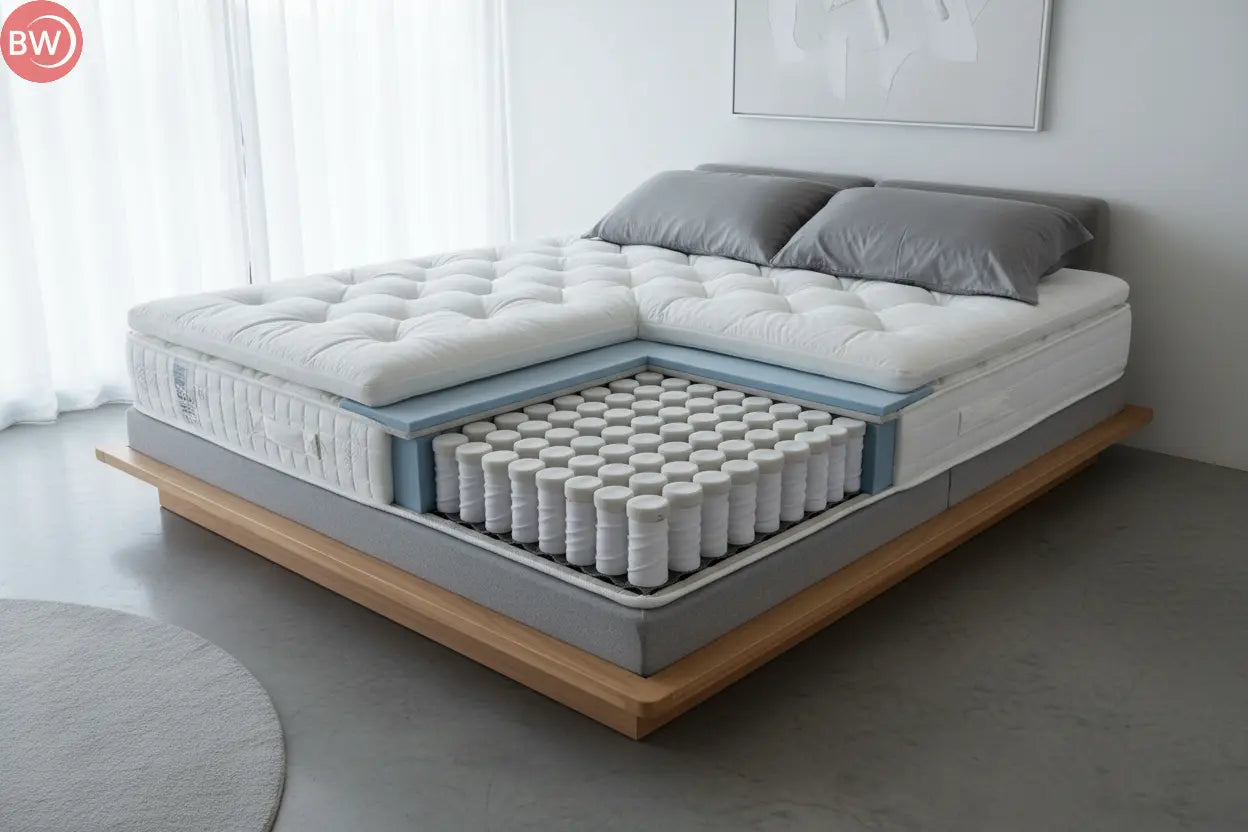
All mattress materials break down with use. Foam layers compress and do not return to their original shape. Pocket springs lose tension. Latex softens unevenly depending on where the most pressure is applied. The result is a surface that performs very differently at year eight compared to year one, even if it still looks intact from the outside.
The Sleep Foundation notes that most mattresses need replacing around the 7- to 10-year mark, though actual performance decline starts earlier. Premium mattresses can lose between 20 and 30 per cent of their support performance after several years of regular use, even with good care. Comfort changes gradually, so many sleepers adapt to the decline without noticing how much their sleep has changed.
How Ageing Affects Sleep and Recovery
Reduced support from an older mattress directly affects sleep cycles. When the body can’t settle into a comfortable position, it shifts more frequently during the night. These micro-arousals interrupt deeper sleep stages, reducing the restorative quality of rest. Over time, this shows up as persistent fatigue, reduced concentration, and slower physical recovery.
The effects of sleeping on an ageing mattress include:
-
Reduced pressure relief on hips and shoulders. Firmer compressed layers push back against the body rather than contouring to it.
-
Increased tossing and turning. The body searches for a comfortable position that the mattress can no longer provide.
-
Poor spinal alignment during sleep. The support zones no longer match the body's natural curves.
-
Decreased recovery during deep sleep. Muscles and joints need proper rest positions to recover overnight.
-
Higher likelihood of morning stiffness. Joints and soft tissue are more inflamed after hours in a misaligned position.
If you’re already dealing with joint sensitivity, choosing a pressure-relief mattress for joint comfort can make a real difference. Healthline also notes that older mattresses can worsen allergy symptoms, in addition to causing physical discomfort, as allergen accumulation builds up deep within the layers over time.
What Happens If You Don’t Replace Your Mattress on Time?
Gradual Impact That’s Easy to Overlook
Sleeping on a worn mattress rarely causes an obvious, immediate problem. The changes happen slowly. Support loss progresses in small increments, and the body adjusts to each new level of discomfort. Most people blame stress, activity levels, or ageing rather than the surface they spend eight hours on every night.
A 2021 study published in the International Journal of Environmental Research and Public Health (PMC8655046) found that sleep surface quality has a measurable effect on pain, stiffness, and daytime fatigue. Participants who replaced old mattresses reported reduced discomfort and improved sleep within weeks. This misattribution problem means many Australians are living with preventable sleep-related discomfort simply because the mattress hasn’t been considered as a cause.
Long-Term Musculoskeletal Strain
Prolonged use of a mattress that no longer supports the body correctly can contribute to ongoing musculoskeletal issues. The spine, hips, and neck are particularly vulnerable because they rely on the sleeping surface to maintain proper positioning for hours at a time.
Risks associated with delaying mattress replacement include:
-
Chronic back and neck pain. Sustained poor alignment accelerates wear of the vertebral discs and surrounding tissues.
-
Reduced sleep quality and fatigue. Fragmented sleep disrupts the body's repair cycle.
-
Poor posture habits during sleep. The body adapts to the uneven surface in ways that carry over to waking hours.
-
Increased pressure on joints. Compressed or uneven foam creates concentrated pressure rather than evenly distributing body weight.
-
Potential aggravation of existing conditions. For those with sciatica, arthritis, or disc issues, a worn mattress can amplify existing pain.
Understanding the Top Signs your Mattress is Causing Back Pain can help you catch the problem before it becomes a long-term issue. AARP also highlights that many adults over 50 underestimate how much their mattress affects daily pain levels, making timely replacement especially relevant for older sleepers.
Is Replacing Your Mattress Every 7–10 Years Really Necessary?
The 7–10 year guideline is based on research into material lifespan and the point at which most mattresses can no longer maintain consistent support. The Better Sleep Council, along with organisations such as the Sleep Foundation and the Hospital for Special Surgery in New York, recommends replacement within this window as a general standard. It’s not an arbitrary number. It reflects how long most commercially available mattress materials hold their structural integrity under regular use.
That said, mattress longevity isn’t fixed. Several factors influence how quickly a mattress declines, and some will need replacement earlier, while others might hold up slightly longer with good care.
Factors that affect how long a mattress lasts include:
-
Mattress material type. Latex tends to outlast memory foam, while lower-density foam degrades faster than high-density options. Hybrid mattresses vary depending on the quality of their coils and foam layers.
-
Body weight and sleep habits. Heavier sleepers place more pressure on the mattress, accelerating compression in the comfort layers.
-
Maintenance and rotation frequency. Rotating the mattress every three to six months distributes wear more evenly.
-
Quality of construction. Higher-coil-count springs and denser foam layers hold up better over time.
-
Environmental conditions. Humidity and heat can accelerate material breakdown, particularly in foam mattresses.
A double-sided firm mattress built for durability offers an advantage here, as both sides can be used to extend even wear. Consumer Reports notes that high-quality mattresses may outlast the standard guideline, but comfort and support often decline before any structural damage becomes visible. The mattress’s physical condition isn’t always the best indicator of whether it’s still supporting your spine.
How to Extend Mattress Life Before You Need to Replace It
Proper care genuinely does slow the rate of mattress deterioration. It won’t stop natural material breakdown, but it can add meaningful years to a mattress’s comfortable life. WebMD notes that consistent mattress maintenance is one of the simplest ways to preserve sleep quality and avoid premature replacement.
Key habits that help include:
-
Rotate the mattress every 3–6 months. This distributes body weight across the full surface rather than concentrating wear in one area.
-
Use a supportive bed base. A quality base maintains even support beneath the mattress. Slatted bases should have gaps no wider than 7 cm to avoid premature sag.
-
Use a mattress protector. A protector shields internal materials from moisture, sweat, and allergen buildup. Learning why you need a mattress protector to extend your mattress's lifespan is one of the most cost-effective steps you can take for your mattress investment.
-
Avoid excessive weight concentration in one area. Sitting on the same edge every day or allowing children to regularly jump on the mattress accelerates uneven compression.
Choice Australia also highlights that knowing when to get a new mattress starts with paying attention to how you feel each morning. Maintenance helps delay replacement, but it doesn’t reset the clock on the underlying materials.
If you’re at the point of replacement, reading the Guide to Cleaning your Mattress at Home can help you transition the old one out hygienically, and understanding How to improve sleep quality with the right mattress can help you make a better choice the second time around.
Conclusion
Most Australians should plan to replace mattress Australia every 7–10 years, though earlier replacement is often worthwhile if support has declined or discomfort has become noticeable. A mattress that no longer supports proper spinal alignment isn’t just affecting your comfort. It’s working against your recovery every single night.
Assessing the condition of your current mattress is the first step. If it shows visible signs of wear, if mornings are regularly stiff, or if it’s been more than a decade, a replacement is likely overdue. Choosing a mattress that genuinely supports long-term spinal health is one of the more consequential decisions you’ll make for your overall well-being.
For those exploring options, a luxury plush mattress for deep comfort offers a different kind of support than a firmer model, and understanding the Difference Between Soft and Firm Mattress Comfort Levels can help narrow down the right choice. You can also explore the best sleep of your life formula for broader guidance on improving nightly rest.