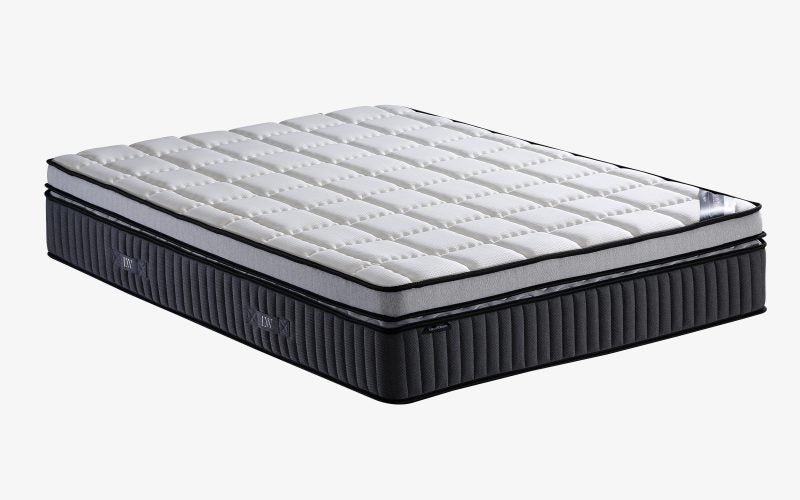
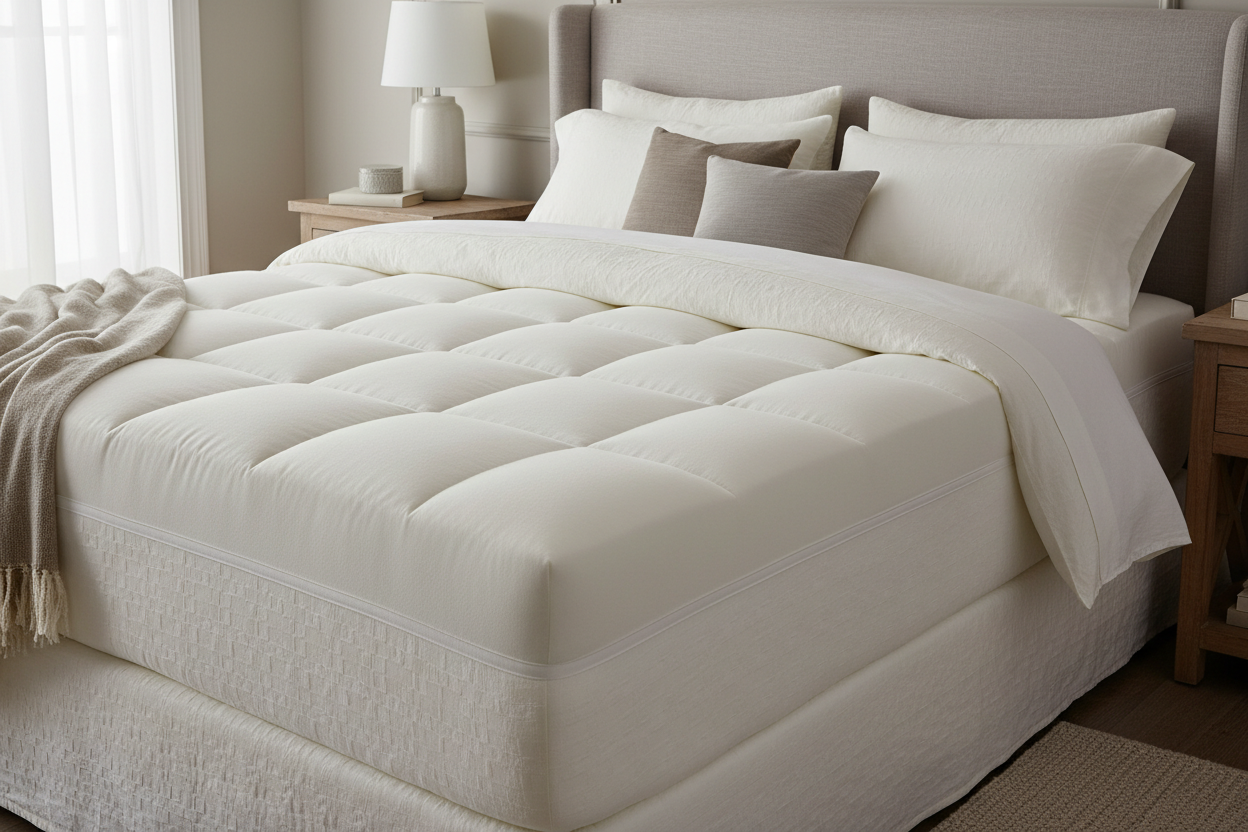
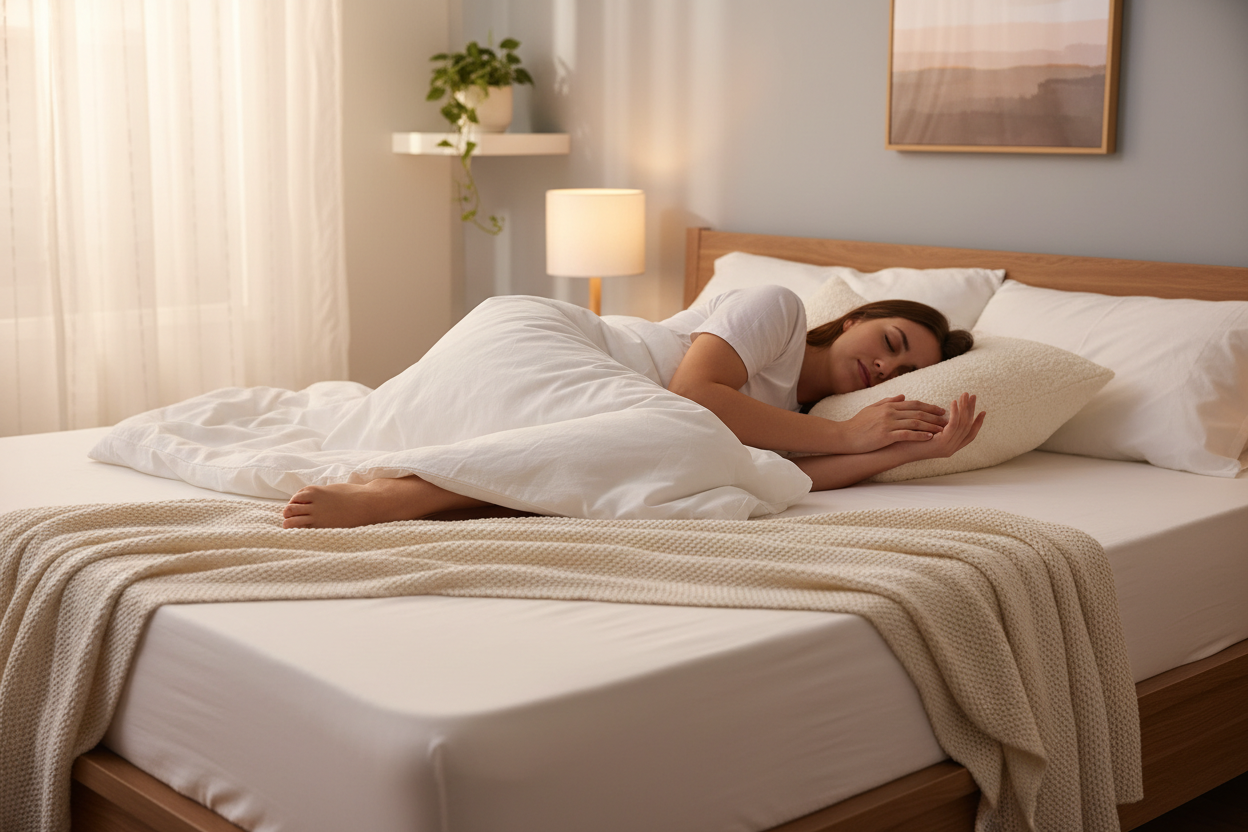
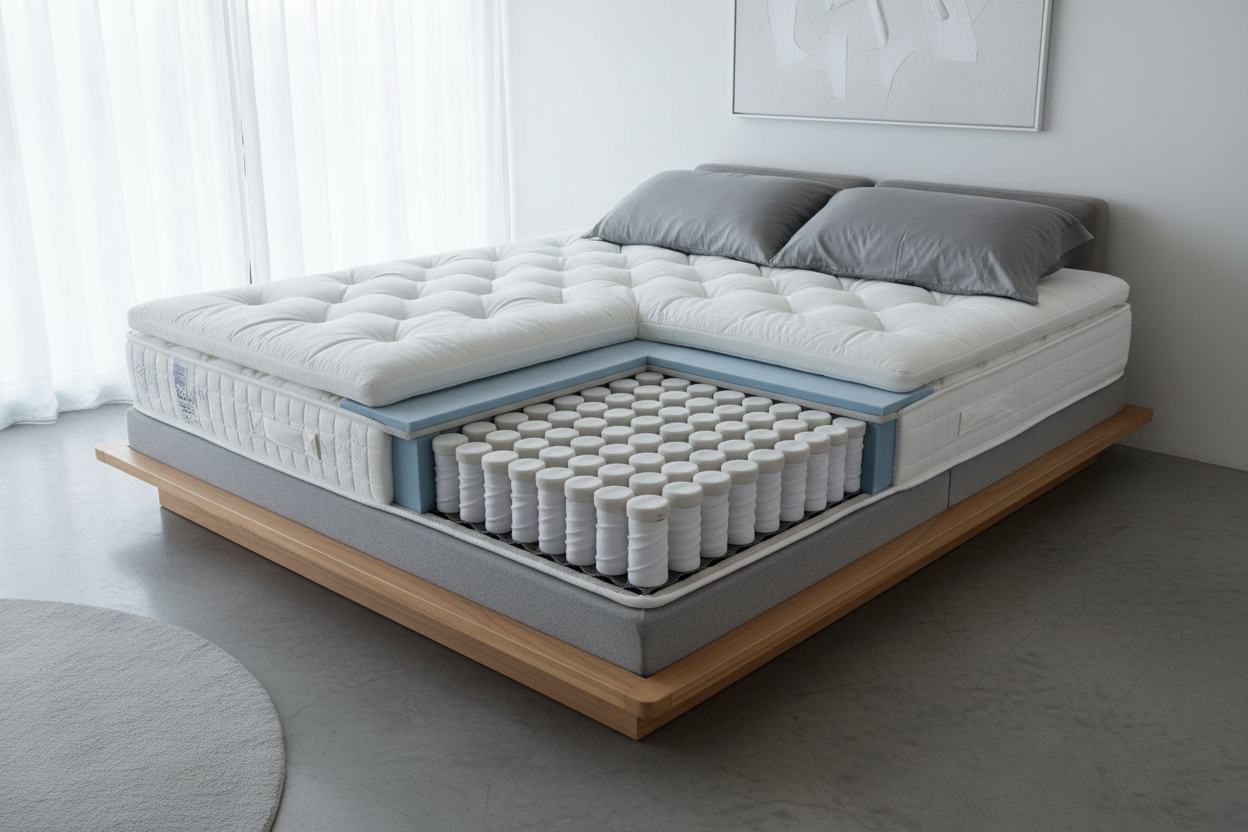
A mattress topper for back pain can reduce discomfort by improving pressure distribution and spinal alignment. Memory foam or latex toppers with medium-firm support often relieve lower back pain, especially when the current mattress is too soft or slightly sagging. This guide breaks down what works, what does not, and how to choose the right option.
Key Takeaways
-
A mattress topper adds a supportive layer that redistributes body weight and reduces lumbar pressure without replacing your existing mattress.
-
Medium-firm toppers in the 5–10 cm thickness range suit most back pain cases, with firmness selection depending on sleep position and body weight.
-
Memory foam contours to the body for pressure relief, while latex offers firmer, more responsive support with better durability.
-
Toppers work best on mattresses with minor surface wear. If sagging exceeds 3–4 cm, they provide limited structural correction.
Can a Mattress Topper Really Help Reduce Lower Back Pain?
Lower back pain during or after sleep is rarely random. Poor mattress support, uneven pressure across the lumbar region, and sagging sleep surfaces all force the spine out of its natural alignment. Over time, that misalignment strains muscles and joints repeatedly across thousands of sleep hours.
A mattress topper adds a comfort layer between the body and the mattress surface. This extra layer redistributes body weight more evenly, reducing concentrated pressure on the lower back. Medium-firm sleep surfaces lead to significant improvements in chronic low back pain and sleep quality compared to firm surfaces without any cushioning layer.
People often notice a difference within 7–14 days of adding a supportive topper to an older mattress. That adjustment period reflects the body’s recalibration to improve pressure distribution, especially at the hips and lumbar spine. Here is how a topper directly addresses lower back discomfort:
-
Improves spinal alignment by filling the gap between the body and a worn or uneven mattress surface.
-
Reduces pressure on lower back muscles by distributing body weight across a broader surface area.
-
Minimises sinking in sagging areas by adding a firmer or more structured layer on top.
-
Helps reduce morning stiffness by better supporting the lumbar spine throughout the night.
-
Delays full mattress replacement in favour of a cost-effective short-term comfort solution.
For a deeper look at how poor sleep posture compounds these issues, the connection between sleep posture and back pain is worth reading before choosing a topper.
Which Mattress Topper Is Best for Back Pain — Memory Foam or Latex?
The two most recommended topper materials for back pain are memory foam and latex. Both offer pressure relief, but they work differently and suit different sleepers.
Memory Foam Toppers
Memory foam contours closely to the body’s shape, adapting to the curves of the hips, lower back, and shoulders. This contouring action reduces pressure points, which makes it especially useful for side sleepers and people with chronic lumbar pain. Higher-density foam (generally 50 kg/m³ or above) performs better for back pain relief than low-density alternatives, which compress too quickly and lose their support within months. Sleep surface properties, including conformability, have a measurable impact on spinal pain outcomes, particularly for people with non-specific lower back pain.
Latex Toppers
Latex is a more responsive material. Rather than sinking around the body, it pushes back with consistent firmness. This makes it better for back sleepers who need stable lumbar support without the “sinking in” sensation of foam. Natural latex also sleeps cooler and resists compression over time, making it more durable in the long term. The relationship between mattress firmness and musculoskeletal comfort shows that responsive surfaces reduce nocturnal movement and positional strain, which matters for anyone who shifts frequently through the night.
Here is a comparison to help narrow down the right choice:
-
Memory foam: better pressure relief and body contouring for chronic pain.
-
Latex: more bounce, cooler sleeping surface, and firmer overall support.
-
Foam suits: side sleepers and those with pressure-point-related pain.
-
Latex suits: back sleepers and active sleepers who need consistent support.
-
Hybrid toppers: combine foam and latex layers, balancing cushioning with responsiveness.
Both materials pair well with a quality mattress base. If you are considering a full upgrade alongside a topper, Slumbercare mattresses offer a range of support levels worth comparing.
How Does a Mattress Topper Improve Spinal Alignment and Back Support?
Spinal alignment during sleep means the vertebrae sit in roughly the same position they would in a healthy standing posture. When a mattress is too soft or uneven, the heavier parts of the body, typically the hips and torso, sink further than lighter areas. This creates a curve in the lumbar region that places sustained stress on the intervertebral discs and surrounding muscles through the night.
A topper corrects this by adding a consistent cushioning layer that fills the micro-gaps between the body and the mattress. Even a 5–8 cm topper can noticeably improve alignment on an ageing or uneven surface, giving the spine the neutral support it needs. Adjustments to sleep surface properties reduce reported back discomfort in people with non-specific low back pain, particularly when the existing mattress no longer provides consistent support.
For people already dealing with chronic issues, pairing a topper with a structurally sound mattress produces the best results. A premium orthopedic mattress for back support provides a stable foundation that a topper can then fine-tune for personal comfort. You can also review common mistakes to avoid when buying a back pain mattress and compounding any existing issues.
Is a Firm or Soft Mattress Topper Better for Back Pain Relief?
Firmness is one of the most important variables to get right. A topper that is too soft increases the body’s sinkage and reduces spinal support. One that is too firm can create new pressure points, particularly at the hips and shoulders.
Medium-firm toppers sit in the middle range and work well for the broadest range of sleepers with back pain. They provide enough cushioning to relieve pressure while maintaining enough resistance to support the spine’s natural curvature. Side sleepers with lower back pain tend to benefit more from medium-firm options than very soft cushioning layers, which allow the hip to drop too far and twist the lumbar spine.
Here is a practical firmness guide based on sleep position and body type:
-
Soft: more comfort padding but less structural support. Suit lightweight sleepers or those using it on a very firm existing mattress.
-
Medium-firm: best all-round balance for most back pain cases and sleep positions.
-
Firm: better for heavier body types who need a stable surface that resists deep compression.
-
Zoned support toppers: use different firmness levels across body zones to target the lumbar area specifically.
-
Adjustable layering: some toppers allow you to reposition internal layers to customise the feel over time.
The differences between soft and firm mattress comfort levels provide additional guidance if you are weighing up firmness options more broadly.
Can a Mattress Topper Fix a Sagging Mattress Causing Back Pain?
A sagging mattress is one of the most common causes of sleep-related back pain. When the surface dips unevenly, different parts of the body receive inconsistent support. The lumbar spine loses its neutral position, and the surrounding muscles compensate throughout the night, often resulting in tightness and soreness by morning. If you are unsure whether your mattress is the problem, the top signs your mattress is causing back pain cover what to look for.
A topper can temporarily reduce surface unevenness and improve comfort on a lightly worn mattress. However, its ability to correct structural sagging has real limits. If the sag exceeds 3–4 cm, the topper conforms to that depression rather than correcting it. The body still follows the dip, just with softer padding around it.
Here is what a topper can realistically do on a sagging mattress:
-
Temporarily reduce surface unevenness on mattresses with minor wear.
-
Add cushioning over shallow sagging areas for improved short-term comfort.
-
Improve sleep posture marginally when the underlying sag is not severe.
-
Delay full mattress replacement by extending usable comfort life by one to two years.
-
Support better sleep alignment on a slightly uneven surface when sagging is minimal.
For mattresses with significant sagging or more than five years of consistent use, a replacement is likely the more effective path. The best orthopedic mattress for back pain with zoned support addresses the structural issues that a topper cannot.
Who Benefits Most from a Mattress Topper for Back Pain?
Toppers are not a universal fix, but they work well for a specific group of people. Those with mild to moderate lower back pain, or those upgrading comfort without replacing their current mattress, tend to see the most consistent results. Effectiveness also depends on the existing mattress condition. A topper placed on a badly degraded or structurally compromised mattress delivers limited benefit regardless of quality.
Body weight also plays a role. Lighter individuals generally get more from softer toppers, while heavier sleepers need a denser, firmer option to prevent bottoming out and losing spinal support.
People who benefit most from using a topper include:
-
Those with mild lower back pain from a mattress that has lost its initial support over time.
-
Budget-conscious sleepers looking for comfort improvement without a full mattress purchase.
-
Side and back sleepers who need extra cushioning at the hips and lumbar region.
-
Owners of older mattresses that have surface wear but no major structural sagging.
-
Office workers and remote workers who accumulate posture-related strain from prolonged sitting need better overnight recovery.
Good sleep habits play a supporting role here, too. Combining a supportive topper with consistent sleep habits for quality rest produces better long-term results than the topper alone. The guide to improving sleep quality with the right mattress is also helpful for the bigger picture.
What to Consider Before Buying a Mattress Topper
Not every topper suits back pain. Material, thickness, and mattress condition all determine whether a topper will genuinely improve support or simply add an extra layer of padding.
A thickness of 5-10 cm is the most effective range for back pain relief. Thinner toppers lack enough material to redistribute pressure properly. Overly thick options, particularly those above 12 cm, can throw off spinal alignment for lighter sleepers who do not exert enough weight to compress the material correctly.
Here are the key buying considerations:
-
Thickness 5–10 cm for the best balance of pressure relief and support.
-
Breathable materials like open-cell foam or latex prevent heat retention, which disrupts sleep quality.
-
High-density foam (50 kg/m³ or above) for better durability and sustained support.
-
A correctly sized mattress prevents shifting and bunching at the edges.
-
Non-slip base to keep the topper in place throughout the night.
Topper quality directly affects spinal support over time. A low-density option that compresses within six months leaves the body progressively less supported each night. The memory foam vs pocket spring comparison for back pain is also worth reviewing if you are weighing up longer-term mattress options alongside a topper. For morning stiffness that persists even with a topper, the difference between morning stiffness and mattress-caused back pain can help identify whether the issue goes deeper than surface support.
Wrapping Up
A mattress topper for back pain offers genuine short-term relief for mild to moderate discomfort. It improves spinal alignment, reduces pressure on the lumbar region, and extends the life of an ageing mattress without the cost of a full replacement. The right choice depends on your sleep position, body weight, and the current condition of your mattress.
Medium-firm toppers in memory foam or latex deliver the most consistent results across the widest range of back pain cases. If sagging is already significant, a replacement mattress is worth exploring. Assess your current surface honestly, then choose a topper thickness and firmness that matches your body’s actual needs.
Sources
-
Jacobson BH, et al. Effect of prescribed sleep surfaces on back pain and sleep quality in patients diagnosed with low back and shoulder pain. Applied Ergonomics. 2010. https://pubmed.ncbi.nlm.nih.gov/20579971/
-
Caggiari G, et al. What type of mattress should be chosen to avoid back pain and improve sleep quality? Review of literature. Journal of Orthopaedics and Traumatology. 2021. https://pmc.ncbi.nlm.nih.gov/articles/PMC8655046/
-
Skarpsno ES, et al. Sleep positions and nocturnal body movements based on free-living accelerometer recordings. Journal of Back and Musculoskeletal Rehabilitation. 2017. https://journals.sagepub.com/doi/full/10.3233/BMR-171018
-
Nijs J, et al. Sleep disturbance and musculoskeletal pain. Medical Research Archives. 2023. https://esmed.org/MRA/mra/article/view/6494
-
National Library of Medicine. Low Back Pain — StatPearls. https://www.ncbi.nlm.nih.gov/books/NBK599022/
-
Sleep Foundation. Best Mattress Toppers for Back Pain. 2024. https://www.sleepfoundation.org/best-mattress-toppers/best-mattress-topper-for-back-pain
-
PerthNow. Is there really a formula to having the best sleep of your life? https://www.perthnow.com.au/lifestyle/is-there-really-a-formula-to-having-the-best-sleep-of-your-life--c-21036455
-
AARP. Best Mattress Toppers for Back Pain. 2024. https://www.aarp.org/health/healthy-living/best-mattress-toppers-for-back-pain/