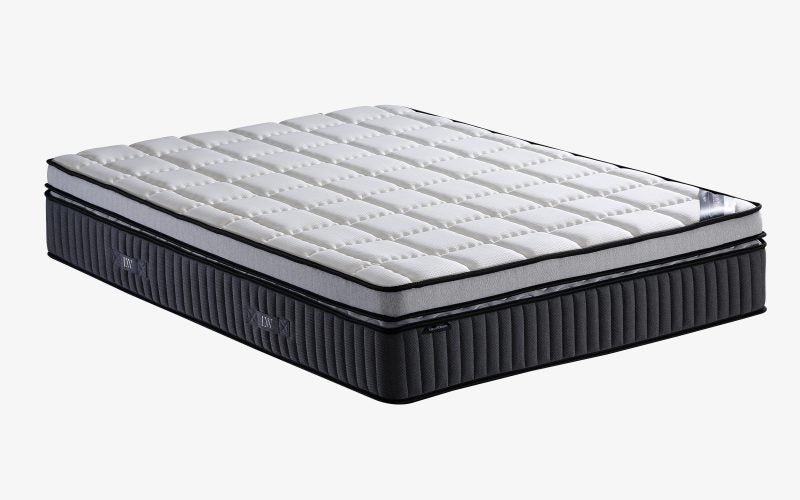
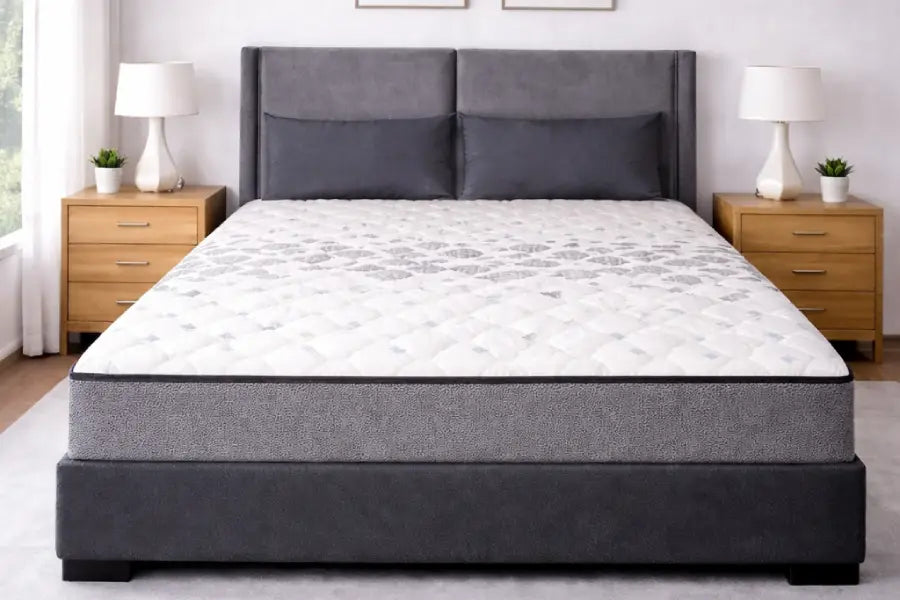
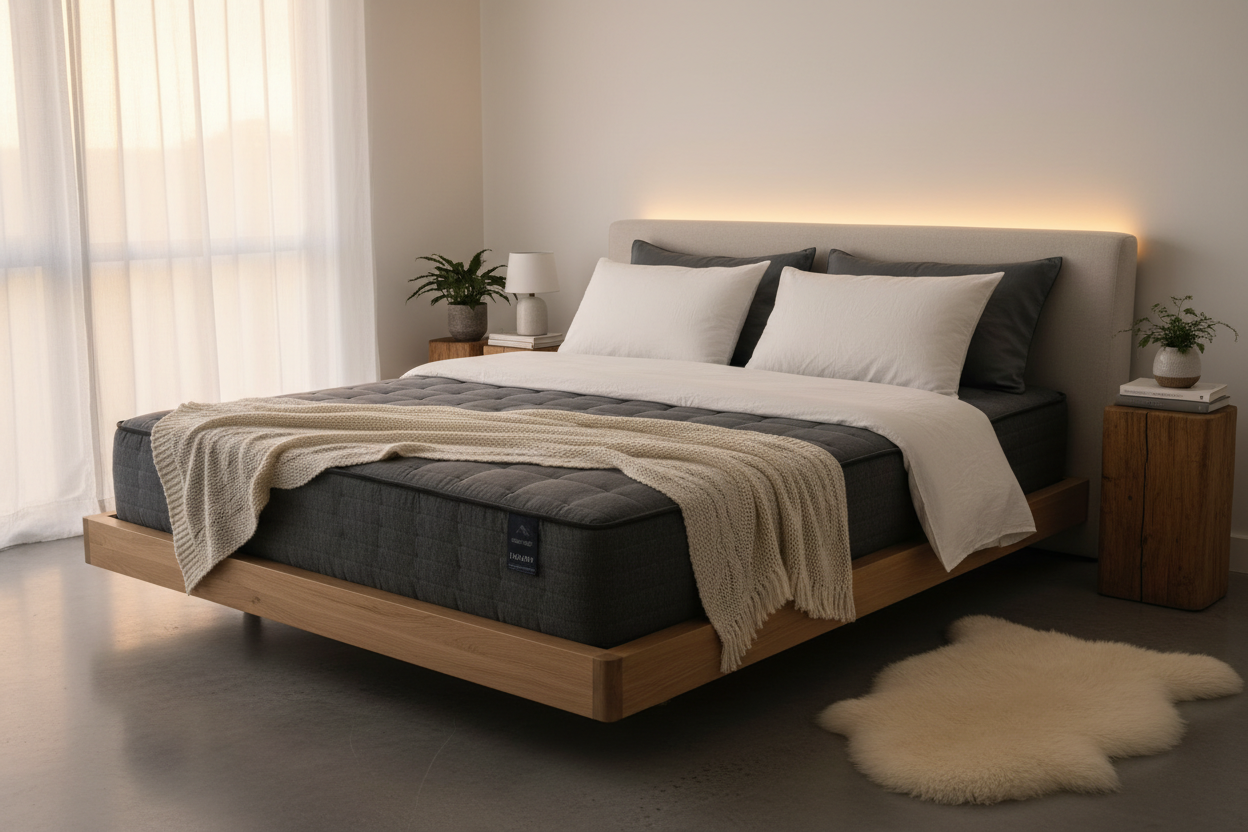
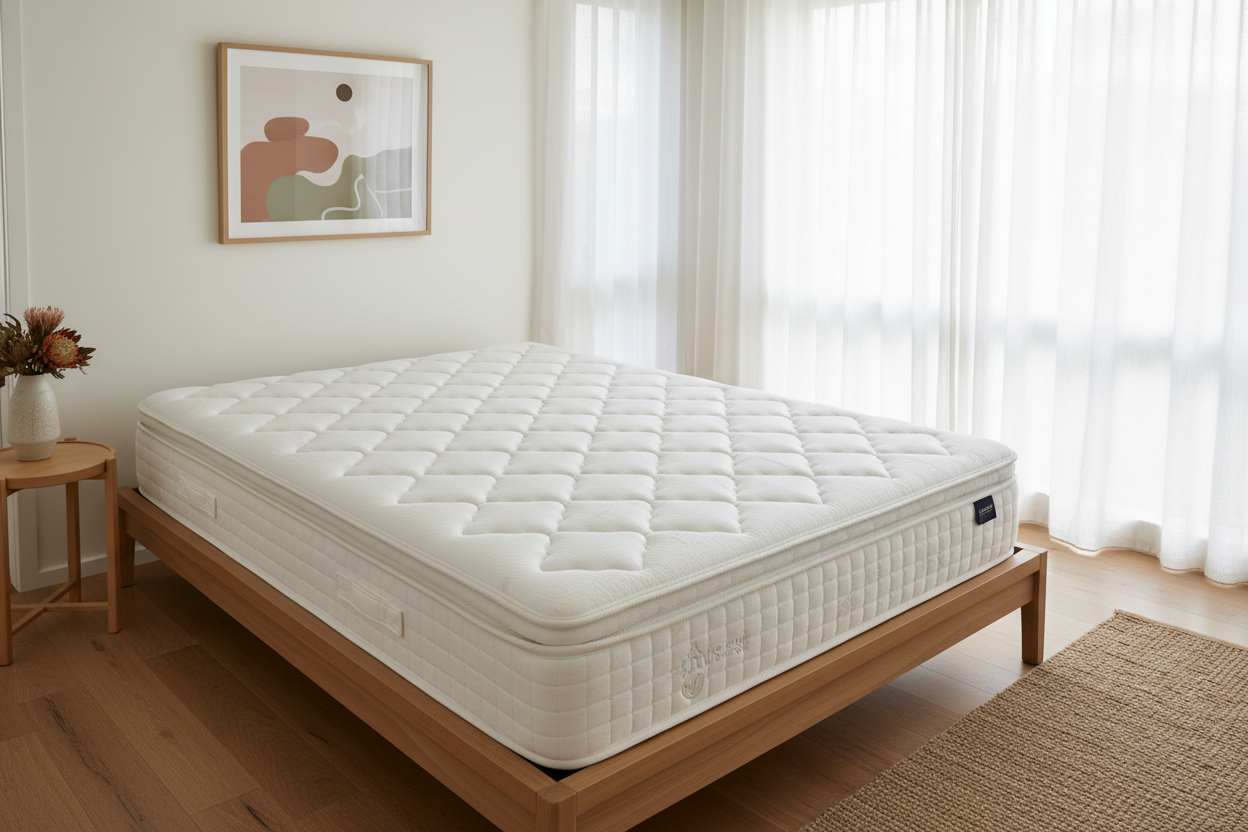
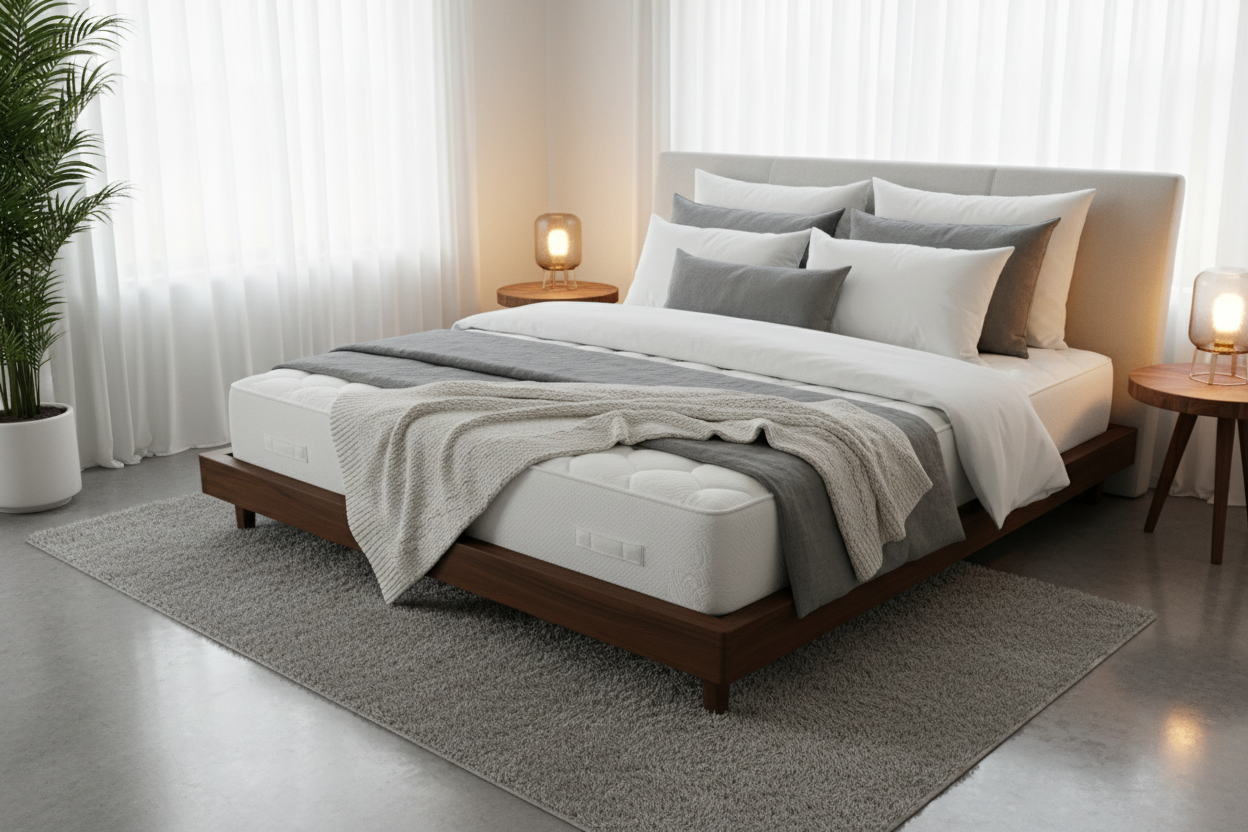
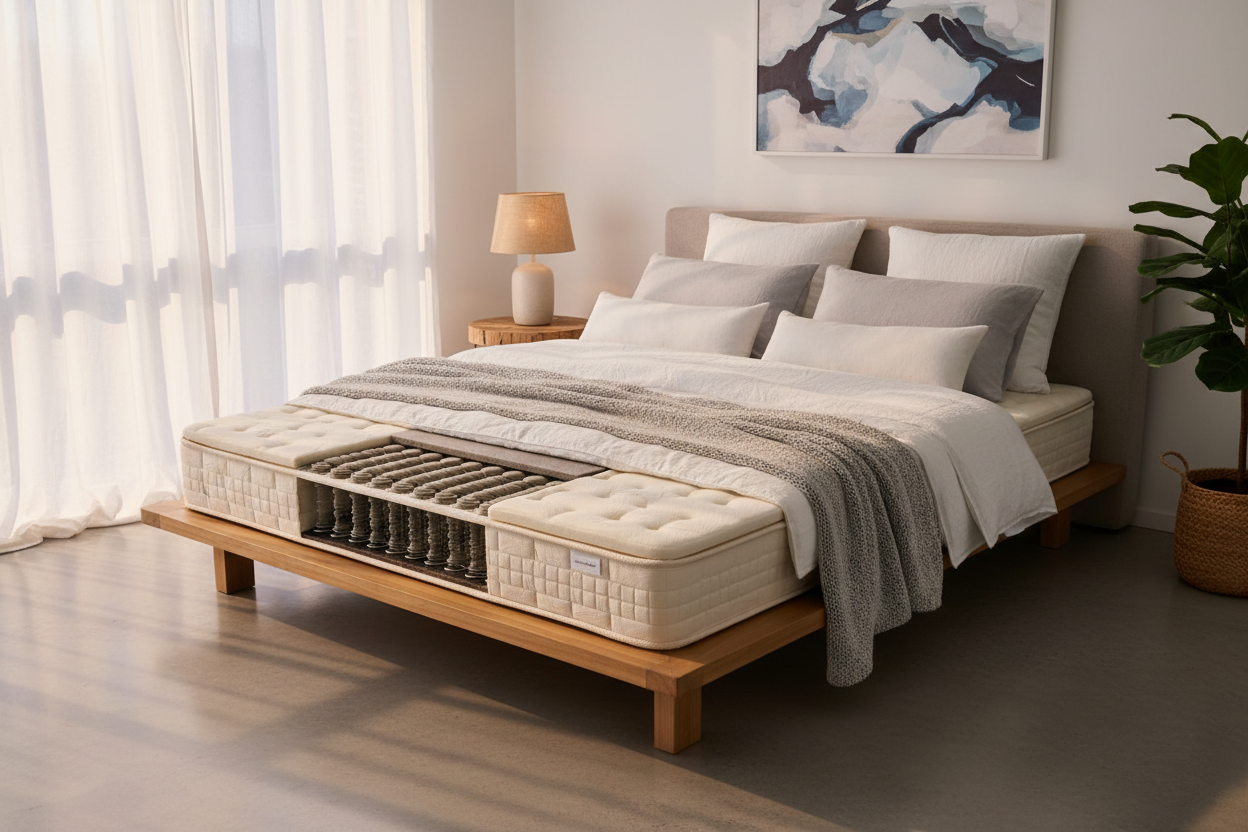
If you spend most of the night on your side, the feel of your mattress matters more than you might think. Side sleeping is actually the most common sleep position among Australians — but it also places the highest demand on a mattress in terms of pressure relief and spinal support. Get the firmness wrong, and you're likely waking up with a sore shoulder, a stiff hip, or that unpleasant pins-and-needles feeling in your arm.
This guide breaks down exactly what to look for when choosing mattress firmness as a side sleeper, how your body weight and sleeping habits factor in, and what material types work best for the way you sleep.
Why Firmness Matters So Much for Side Sleepers
When you lie on your side, two parts of your body bear the most weight: your shoulders and your hips. Unlike back sleepers — who have a relatively flat contact surface — side sleepers create two significant pressure points that can dig into a mattress that's too firm, or sink too deeply into one that's too soft.
A mattress that's too hard pushes back against the shoulder and hip, compressing soft tissue and restricting blood flow. This is what causes that familiar numbness or aching after a few hours. On the other end, a mattress that's far too soft lets those pressure points sink so deeply that the rest of the spine — particularly the lumbar region — sags out of alignment.
The sweet spot for most side sleepers is a surface that cushions the protruding points of the body while still holding the torso, waist, and hips in a straight, neutral line. That usually means a medium to medium-soft feel, roughly a 4 to 6 out of 10 on the standard firmness scale.
If you've been waking up with shoulder tension or lower back stiffness, it's worth reading about the top signs your mattress is causing back pain — many of the warning signals apply directly to side sleepers on the wrong surface.
The Ideal Firmness Range for Side Sleepers
Most sleep experts and mattress specialists recommend that side sleepers choose a mattress in the medium to medium-soft range. Here's what that looks like in practice:
-
Soft to Medium-Soft (3–5/10): Best for lightweight side sleepers (generally under 60 kg). These surfaces offer generous contouring without bottoming out for petite frames.
-
Medium (5–6/10): The most universally suitable range for average-weight side sleepers. Provides a balance of cushioning and support.
-
Medium-Firm (6–7/10): More appropriate for heavier side sleepers (over 90 kg) who need firmer resistance to prevent excessive sinking at the hips.
If you're unsure where to start, browsing Bedworld's full mattress range filtered by feel is an easy way to narrow down your options. The collection includes plush, medium, medium-firm, and firm options across a variety of sizes and materials.
How Body Weight Influences Your Choice
Body weight is one of the most important — and most overlooked — variables in mattress selection for side sleepers. The same mattress that feels like a cloud for a 55 kg person can feel far too firm for someone who weighs 95 kg, because heavier bodies create greater downward force at those shoulder and hip contact points.
As a general guide:
-
Under 60 kg: Lean toward a softer or medium-soft feel. A plush surface will cradle your frame without the risk of excessive sinkage.
-
60–90 kg: A medium mattress is typically the ideal starting point. This is where most side sleepers land, and it offers the best balance of pressure relief and alignment.
-
Over 90 kg: Consider a medium-firm option. You need enough resistance to prevent your hips from sinking deeper than your shoulders, which can twist the spine.
It's also worth considering that couples with significantly different body weights may benefit from looking into split-feel mattress options or adjustable bases — a topic worth exploring further if you and your partner consistently struggle to agree on comfort.
Best Mattress Types for Side Sleepers
Memory Foam
Memory foam is widely regarded as one of the best materials for side sleepers. It responds to body heat and pressure by contouring closely to your shape, which means it actively cradles the shoulder and hip rather than creating resistance. It also offers excellent motion isolation — ideal if you share the bed with a partner who moves frequently. The main thing to watch for is heat retention; many modern options address this with gel-infused layers.
If temperature is a concern, the cooling gel mattress range at Bedworld includes options specifically designed for Australians who sleep warm — combining the contouring benefits of foam with improved heat dissipation.
Pocket Spring
A quality pocket spring mattress can work well for side sleepers, particularly when paired with a comfort layer (such as memory foam or latex) on top. Independently wrapped springs respond to individual pressure points rather than moving as one unit, which means better targeted support for the shoulder and hip areas. Pocket spring mattresses also tend to sleep cooler than all-foam options.
Hybrid
Hybrid mattresses combine a pocket spring base with one or more foam or latex comfort layers. For side sleepers, this combination often hits the ideal balance: the springs provide lift and support, while the comfort layers cushion the pressure points. A hybrid in the medium to medium-soft range is a strong all-round choice.
Latex
Natural latex offers responsive support — it pushes back with gentle resistance rather than letting you sink deeply. For side sleepers, this can feel supportive without the "stuck" sensation that some people dislike in memory foam. Latex is also naturally breathable and durable, making it a good long-term investment.
Don't Overlook Your Pillow
Even the best mattress for side sleeping won't deliver its full benefits if you're using the wrong pillow. Side sleepers need a higher-loft pillow that fills the space between the neck and the shoulder — keeping the cervical spine aligned with the rest of the back. A pillow that's too flat lets the head drop, creating tension in the neck and upper shoulder.
If you wake up with neck stiffness or shoulder tightness, it may not be your mattress at all — it could be your pillow. For detailed guidance, the best pillows for neck pain guide covers exactly what to look for in terms of loft, material, and sleep position compatibility.
What If You Already Have a Mattress That's Too Firm?
If you're not in a position to replace your mattress right away but find it's too firm for comfortable side sleeping, a mattress topper can be a cost-effective interim solution. A memory foam or latex topper of around 5–7 cm can add enough softness to relieve shoulder and hip pressure without requiring a full mattress swap.
Bedworld's mattress topper collection includes a variety of options across different materials and thicknesses. It's also worth reading about how mattress toppers can relieve back pain and improve sleep quality before making your selection.
When to Replace Rather Than Adapt
There's a limit to what a topper or new pillow can fix. If your current mattress is sagging, lumpy, or simply worn out, adding accessories on top will only do so much. Most quality mattresses have a lifespan of seven to ten years — after that, even a once-great surface may no longer provide the support your body needs.
If you're consistently waking up stiff, sore, or unrested, it may be time to consider a full replacement. The guide on how often to replace your mattress walks through the most common signs that an upgrade is overdue.
If you're also dealing with persistent back or joint issues beyond standard side-sleeping discomfort, it may be worth comparing a back support mattress versus an orthopedic option to understand which is better suited to your specific needs.
Quick Summary: Choosing the Right Firmness as a Side Sleeper
- Side sleepers need a mattress that cushions the hips and shoulders while keeping the spine aligned.
- Medium to medium-soft (4–6/10) is the most recommended firmness range.
- Lighter sleepers can lean softer; heavier sleepers may need medium-firm for adequate support.
- Memory foam, hybrid, and pocket spring mattresses are all good candidates — it comes down to the feel and comfort layer.
- A higher-loft pillow is essential to complete the picture for proper spinal alignment.
-
A mattress topper can bridge the gap if your current surface is too firm.
- If your mattress is more than 7–10 years old, replacement is likely more effective than trying to compensate.