Cart
0
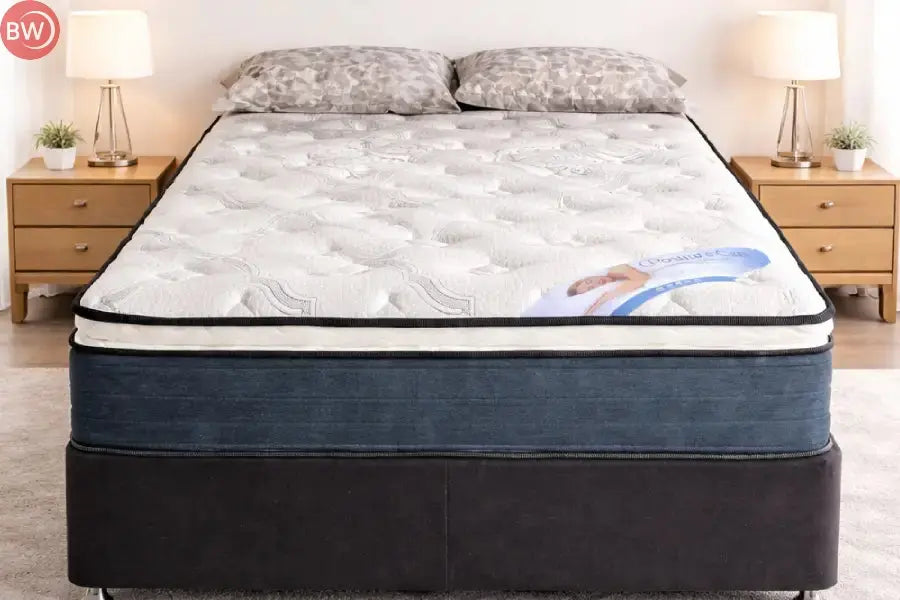
Most of us understand that a comfortable mattress makes a difference to sleep quality. But ask someone about their bedroom layout and how it affects their rest, and you'll usually be met with a puzzled look. The truth is, the physical arrangement of your bedroom, where the bed sits, how furniture is distributed, the way light enters, how much visual noise exists, shapes the quality of your sleep just as meaningfully as the bed itself.
This isn't interior design theory. It's grounded in how the human brain processes its environment, how your nervous system reads "safe versus alert," and how the cues your bedroom sends each evening either invite deep rest or quietly undermine it.
Whether you're redesigning your space from scratch or just looking for small tweaks that could make a real difference, here's what science and sleep research actually tell us about bedroom layout and what you can do about it.
It Starts With the Bed Position
The single most influential layout decision you'll make is where the bed goes. And the most common mistake Australians make is simply pushing it against whatever wall seems to fit, without considering how that position affects their psychological sense of security during sleep.
Sleep experts often reference the concept of the "command position" placing the bed so you can see the room's entrance without being directly in line with the door. This position satisfies a deep evolutionary instinct: you can monitor your environment without feeling exposed. It sounds abstract, but the effect on the nervous system is real. People who sleep with their back to the door often report lighter, more restless sleep even when they can't explain why.
Where your bed sits in the room isn't just a practical decision, it's a signal your brain reads every night when it decides whether to fully let go or stay slightly on guard.
Equally important is spacing. A bed crammed against a wall on one or both sides restricts movement and can subtly reinforce a sense of confinement. Wherever possible, aim for at least 60–90 cm of clearance on each side you access. This has particular relevance if you're choosing a bed size sometimes a smaller mattress in a well-proportioned layout genuinely outperforms a larger one that dominates the available floorspace.
Avoid positioning the bed directly under a window, where light and noise intrude earliest in the morning. Similarly, avoid sharing the bedhead wall with a kitchen, laundry, or bathroom, vibration and sound transmission through shared walls are a common and underappreciated source of sleep disruption.
Furniture Proportion and Flow Matter More Than You'd Think
Bedroom furniture serves two functions simultaneously: practical storage and visual composition. When furniture is chosen or arranged without considering the latter, it creates a room that feels "off" even when you can't pinpoint why, and that low-level visual tension carries through into your sleep.
The most common issue is scale mismatch. An oversized Bedroom Furniture piece , a towering wardrobe, a bulky chest of drawers in a small room compresses the space and makes the ceiling feel lower. Conversely, too many small pieces scattered around a larger room creates visual fragmentation. Neither extreme is conducive to restfulness.
A practical principle: the bed should be the visual anchor, with everything else supporting it. Bedside tables of matching or complementary height, a dresser that doesn't dominate the sightline from the pillow, and clear movement paths between key points in the room, these aren't aesthetic luxuries, they're functional decisions that shape how the room feels to live and sleep in.
Practical Tip
Before rearranging or purchasing new furniture, tape out the footprint of each piece on the floor with painter's tape. It's one of the most reliable ways to test proportion and flow before committing to a layout.
For bedrooms with limited storage, a very common situation in Australian apartments and older homes, investing in a Storage bed frame can significantly reduce the amount of additional furniture needed, keeping the room calmer and more breathable. Under-bed storage removes the need for multiple standalone units competing for floor space.
Clutter Is a Sleep Disruptor in Disguise
There's solid research behind what most of us sense instinctively: a cluttered bedroom undermines sleep. Studies consistently show that people who describe their bedrooms as cluttered report more difficulty falling asleep, more mid-night waking, and less satisfaction with their overall rest compared to those who keep the space tidy.
The mechanism is straightforward. Visual clutter keeps the prefrontal cortex, the part of the brain responsible for planning and problem-solving, subtly active. Even when you're not consciously processing the pile of clothes on the chair or the stack of papers on the dresser, your brain is registering unresolved tasks. It can't fully shift into the passive, receptive state that deep sleep requires.
Layout decisions can help here enormously. Consider:
- Choosing furniture with concealed storage rather than open shelving where items accumulate visibly
- Designating a single "landing zone" a blanket box at the foot of the bed, for instance, where items placed temporarily don't spill into the wider room
- Removing or relocating anything work-related from the bedroom entirely, since these objects create the strongest mental associations with alertness
- Keeping surfaces (bedside tables, dressers) to a maximum of three or four deliberate items
When clutter management meets good furniture choices like A Cohesive Bedroom Furniture Set that integrates storage naturally, the cumulative effect on nighttime calm is genuinely significant.
Lighting Zones: The Most Underrated Layout Element
Most Australian bedrooms are lit by a single overhead light. It's functional, but it's almost the worst possible set-up for evening wind-down. Bright overhead light in the hours before sleep suppresses melatonin, the hormone that signals your body to prepare for sleep with notable effectiveness. Yet this is often the default because the room's layout hasn't been planned with layered lighting in mind.
A sleep-supportive bedroom layout incorporates at least two lighting sources: a softer, warm-toned bedside option and a dimmable or switchable overhead. Positioning bedside tables at proper lamp height on both sides of the bed, even for solo sleepers, creates visual balance and practical flexibility. Wall-mounted reading lights are an excellent option in smaller rooms where surface space is limited.
The other lighting challenge is natural light. Australia's long summer days mean early, bright mornings and a bedroom positioned to receive direct eastern morning sun without appropriate window treatment is simply working against you. Blackout curtains or blinds should be considered a functional sleep tool rather than a luxury, particularly if your room's layout means the bed faces or is adjacent to an east- or north-facing window.
Choosing the Right Headboard Height for Lighting Balance
An often-overlooked detail: the height of your headboard affects how bedside lighting reflects and distributes around the room. Taller, upholstered headboards provide a soft acoustic buffer and a visual backdrop that reduces the sense of exposure at the head of the bed, contributing meaningfully to that feeling of sheltered calm that supports deeper sleep. If you're exploring Contemporary Bed Frame Styles, headboard height is worth factoring into the sleep-function equation, not just the aesthetic one.
Temperature, Airflow, and the Role of Furniture Placement
Bedroom temperature is one of the best-supported variables in sleep research, cooler rooms (generally 16–20°C) consistently correlate with better sleep onset and deeper slow-wave sleep. But layout decisions directly affect airflow and temperature regulation in ways most people don't consider.
Furniture placed in front of or near air vents, ceiling fans, or windows blocks the circulation that keeps the room comfortable. A wardrobe pushed against the only exterior wall in a small room can trap warm air. Similarly, beds positioned directly under air conditioning outlets expose sleepers to airflow that may be too direct, disrupting sleep even as the room itself is cooling.
Breathable bedding choices work in concert with layout here. A Quality Mattress Topper that manages heat and moisture, combined with a well-ventilated room, performs meaningfully better than either element alone. If you share a bed, airflow around the sleeping surface not just in the room becomes doubly important.
For those who struggle with temperature regulation year-round, an Adjustable Bed Base that allows individualised positioning can also help elevating the upper body slightly improves airflow across the torso, which is one of the body's primary mechanisms for shedding heat during sleep.
The Psychological Signals Your Bedroom Sends
Sleep scientists describe the bedroom as a "conditioned stimulus." Every time you walk in and feel the room is calm, ordered, and devoted to rest, your brain begins to associate the space with sleep. Every time you use it for work, vigorous exercise, or stimulating screen activity, you dilute that association and over time, your brain stops treating entry into the bedroom as a signal to wind down.
Layout is central to this. A bedroom that accommodates a desk, a TV, exercise equipment, and overflowing laundry is sending mixed signals regardless of how comfortable the mattress is. The physical arrangement of the space communicates its purpose or its lack of one.
This is why Modern Bedroom Design Thinking increasingly emphasises intentionality over maximising function. A room that does fewer things, and does them well, typically supports better sleep than one that tries to serve as home office, gym, and entertainment lounge simultaneously.
If your space genuinely won't allow for a dedicated sleep environment, partition thinking helps. A bookcase divider, a curtain, or even a consistent visual boundary between the sleeping area and any multi-use zone can partially restore the conditioning effect, your brain learns to associate the partitioned sleep zone with rest, even if the broader room serves other purposes.

Putting It Together: A Bedroom Layout Checklist for Better Sleep
The changes that make the biggest difference don't always require a full renovation. Here are the highest-impact layout adjustments to consider:
- Bed position: Place the bed so the door is visible but not directly opposite; allow adequate clearance on both sides
- Furniture scale: Choose pieces proportional to the room, the bed should anchor the space, not compete with it
- Storage integration: Reduce visible clutter through smarter bed frames with storage, blanket boxes, and closed-door furniture
- Lighting layers: Add warm bedside lighting; install blackout window treatments if morning light is an issue
- Airflow: Keep furniture clear of vents and exterior walls; choose breathable mattress layers and toppers
- Dedicated sleep zone: Remove or relocate work equipment, screens, and exercise items from the sleeping area
- Right-sized mattress: Ensure your mattress dimensions suit both the room and your actual sleep needs, not just the largest size that physically fits
- Pillow support: Complete the sleep environment with pillows suited to your sleeping position, since even the best layout won't compensate for poor spinal alignment overnight
Ready to Upgrade Your Sleep Environment?
Explore Bed World Online's range of bed frames, mattresses, and bedroom furniture — designed to help Australians sleep better, every night.